Author: R. Ross

  • Rio1992, Rio+20 and the UNFCCC

    Rio1992, Rio+20 and the UNFCCC

    – Conference of Parties: Don’t compare apples to oranges!

    I started to write about the happenings at Rio+20, while sitting in one of its food courts. But I realized I needed more time and distance to formulate my perspective and expectations about Rio+20, so I decided to write these comments after a week at the world’s Second Earth Summit (what Rio+20 should have been called).

    After a week at this conclave I came to realize I had fallen into a trap. When I first started to think about the Rio+20, I found myself comparing it to the conference of parties (COPs) of the various UN Conventions in general and more specifically those of the UNFCCC. These political conventions (their structures, functions and expected outcomes) were first formulated at the First Earth Summit.

    From this COP perspective, my expectations for results at Rio+20 were cautiously optimistic. I thought we would see some advances in issues related to the three UN conventions on biodiversity, climate and desertification. Despite this measured optimism, however, my first judgments of the recent conference were harsh: no step-like, sorely-needed progress would be achieved; NATO (no action, talk only) would prevail; political posturing (blah, blah, blah) would abound; and a declaration by attending global leaders at the end calling for advances in saving species, capping carbon dioxide emissions and arresting land degradation, respectively, would fail to emerge. The Earth Summit’s platitudes, I assumed, would likely be similar to those made in earlier decades at other international conferences.

    I was wrong, I now realize.

    The problem was that I was comparing proverbial apples and oranges, an EARTH SUMMIT of leaders (apples) with an accounting of progress made over 20 years through the annual COPs where negotiators are trying, against all political and economic odds, to hammer out a roadmap for the sustainability (e.g. long term into the distant future) for the planet (oranges).

    A Search for Understanding

    An EARTH SUMMIT is NOT a COP. In theory, Rio+20 is really a Conference of Humanity, the grandchild of the 1972 Stockholm Conference on the Human Environment. In other words, an Earth Summit of global leaders can only legitimately be compared with Stockholm and the Rio1992 Earth Summit.

    The climate COPs, on the other hand, are held each year by the UNFCCC’s Conference of Parties, with 17 annual ones having been held so far and the 18th scheduled to be held in Qatar later this year (2012). Negotiators from most countries meet on an uneven climate playing field to iron out different, often competing perspectives on how to prepare for and cope with climate change and its environmental and societal consequences.

    Rio+20 should not be viewed as a COP-like meeting. It was—in my view—supposed to look back to assess progress since 1992 (as well as since the forgotten Stockholm conference) with regard to various aspects of human interactions with the environment. Its purpose was not to assess the progress in negotiations since COP 17 in Durban, South Africa last year. Many people (originally, myself included) seem to be judging, often unknowingly, the success or failure of the summit based on political progress since Durban.

    There is no doubt that the key to arresting the continued global warming of the atmosphere (or the loss of biodiversity or increased desertification) rests with political leaders and their collective will to act worldwide on the numerous creeping threats to humanity.

    But an Earth Summit like Rio+20 is not just a political meeting. It involves all other facets of society: companies, educators, disaster managers, students, etc. This is why it is important NOT to compare the assembly of civil society at Rio+20 to the annual political events that are the COPs.

    Looking back to 1992 or even 1972, concern about the state of the planet is at an all-time high. There are many examples of this, not least of which is Kenyan environmental activist Wangari Mathaai’s 2004 award of the Nobel Peace Prize (there is no Nobel Prize yet specifically for the environment). In 2007 the IPCC process, as one drawing recognition to worldwide growing concern about the consequences of a warming atmosphere, received the recognition of the Nobel Committee.

    An Excel spreadsheet delineating progress to a healthier interaction of societies and their natural environments would be impressive. Concern expressed in different ways and at different rates has shown up in corporations (greenwashing notwithstanding), in civil society (convening their parallel peoples’ summits), the awakening and empowering of youth (over half of the earth’s population today), in cities large and small (institutionalizing recycling, smart energy use, carbon-reducing programs), in schools from kindergartens to universities (bringing environmental into their lesson plans), governments (shifts to alternative energies), and so forth. Concepts like sustainability, resilience, adaptation, green economy, zero carbon society are now commonly used, even by civil society and not just academics.

    So, in this regard Earth Summit is a milestone conference to take stock of successes and to lay out an “Agenda21 + 40” (in 2032). What is missing though, even with the progress that really has been made in awareness and in action, are more aggressive steps toward poverty reduction, toward disaster risk reduction and in electing leaders who have the backbone to make hard decisions the benefits of which will occur well beyond their time in office.

    American humorist Will Rogers once said, “Even if you are on the right track, you will be run over if you are not going fast enough.” When it comes to coping with human induced climate change, political leaders are not yet aware that there is a faster train approaching humanity’s chances for surviving as we have come to know and expect it.

    A Rio+40 Earth Summit will likely take place too late for many of the vulnerable, people and countries. We have identified many tipping points for environmental change but have yet to identify the tipping point when policy makers will realize they must face the climate change issue head on.

    Even the notion that “There is no Planet B” does not seem to raise a political eyebrow. Suggestions, please . . . and soon!

  • Climate Change and Energy Development

    Climate Change and Energy Development

    – We Live in Two Different Worlds

    If the climate scientists’ projections about the dangerous impacts of the increasing emissions of greenhouse gases are valid and if the energy community’s optimistic projections about future fossil fuel production are correct, the climate change and energy development worlds are on a collision course. As a proverb goes, “if you stay on the path you are on, you will get to where you are going.” To avoid this otherwise inevitable collision, we need to get on a new path.

    For the past several years I have been straddling two different worlds, that of the climate community and the world of oil and natural gas. The former world is the one I have worked in as a researcher for about 40 years. Focusing on climate, water and weather variability and extremes and on climate change. With regard to the world of the oil and gas, I have been just an observer listening to energy projections out to 2050, for exploration, production and consumption of oil and gas.

    For climate issues I focused on concerns about how societies might cope with yearly variability and extreme event as well as with foreseeable consequences of a 1 or 2 degrees C warming in the 21st century. I witnessed debates between climate change believers and climate change skeptics (I now believe human activities are the culprit for steadily increasing heat-trapping greenhouse gas emissions to the atmosphere).

    In the other world — that of the oil and natural gas community— it is not at all apparent that there is a high level of concern about fossil fuel-related greenhouse gas emissions. In a corporate way, this is understandable. Oil and gas corporations are expected to find, extract, refine and bring to the global marketplace oil and gas supplies. They do it well. In fact, time is on their side; constantly emerging new locations and technologies and improved efficiency and conservation techniques for oil and natural gas extraction seem to have put peak oil worries on the proverbial backburner.

    The climate community warns about the dangerous influence of increasing CO2 levels in the atmosphere. The UN Framework Convention for Climate Change (UNFCCC) states this fear in the following way:

    The ultimate objective of the Climate Change Convention (UNFCCC) is to achieve “… stabilization of greenhouse gas concentrations in the atmosphere at a level that would prevent dangerous anthropogenic interference with the climate system.

    Most likely there are temperature thresholds in the climate system that, if crossed, will wreak havoc on the climate system and on societies as we have come to know them. However, scientists do not yet know precisely where those thresholds of adverse changes are, despite scientific and media speculation. In theory and in practice precaution should rule the day, but in this case it does not. The following link to a NASA website highlights observations of the climate warming trajectory that our planet has been on between 1880 and 2011.

    Please go to this link: http://www.globalissues.org/video/798/global-temperature-anomaly

    The climate community has proposed that policymakers consider planetary “geo-engineering schemes.” Such schemes attempt to tamper with the planet’s climate regime by, for example, mimicking volcanic eruptions, dumping iron particles in the ocean, putting millions of mirrors in space, planting more trees, and design mechanical trees to capture carbon and sequestering carbon beneath the Earth’s surface.

    Meanwhile, members of civil societies worldwide have become involved in projects to reduce the carbon content of the atmosphere: better light bulbs, recycle, hybrid cars and buses. They are increasingly demanding green, if not low carbon, societies and a greater dependence on wind, solar and water energy.

    As for oil and gas, the amount of recoverable oil and gas worldwide even with today’s technology is mind-boggling. And new discoveries and techniques (such as horizontal drilling for fracking operations) seem to be occurring each new year. So, if there is a fossil fuel resource still in the ground I believe it will be extracted when the price and the demand deems it opportune to do so. Perhaps a good representation of the rapid exploitation of fossil fuel resources is a brief video of the expansion of exploration and extraction of fossil fuels from the Bakken formation in north central US (the states of North Dakota and Montana) and the Canadian provinces of Alberta and Saskatchewan. Some have suggested that the gas reserves there are double those to be found in Saudia Arabia.

    exponential exploitation of fossil fuels extraction as a result of new technologies (e.g., horizontal fracking)

    These are the two worlds: one filled with dire predictions about the consequences if increasing dependence on fossil fuel burning to achieve growth and development goals; the other filled with joy at every new oil or natural gas find somewhere, anywhere, on the globe. Neither of these worlds has direct influence on the other.

    I now believe that these two worlds will collide in this century, and more sooner than later. I believe all of the proposals to provide “sunshade to the planet” in attempts to modify the human enhancement of the naturally occurring greenhouse effect or to sequester carbon or to green the economies (these are not the same as low carbon economies) are like band-aids to deal with a gaping wound. At best these are short-term technological fixes for processes that, if left unaddressed, will likely challenge the existence of humanity itself.

    Written 42 years ago, climate scientists concluded in a 1971 MIT Conference “Report of the Study of Man’s Impact on Climate (SMIC),

    We recognize a real problem that a global temperature increase produced by man’s injection of heat and CO2… may lead to dramatic reduction even elimination of Arctic sea ice.” This exercise [convening of a conference in inadvertent climate modification] would be fruitless if we did not believe that society would be rational when faced with a set of decisions that could govern the future habitability of our planet.

    Neither climate scientists nor today’s (or even tomorrow’s) policymakers will resolve the global warming dilemma. Governments are in the fossil fuel business. They rely on cheap energy at least for foreseeable future in the absence of other bountiful sources of cheap energy. Yet governments also fund the climate research that produces the scary scenarios and warnings about continued global dependence on fossil fuel consumption.

    It is time to unleash engineering ingenuity, whether in a formal lab or in a home-based workshop. In fact, engineers gave us all the technologies we depend on today. Maybe the unbridled engineering thinking will devise ways to “suck” carbon dioxide and other greenhouse gases directly out of the atmosphere in great amounts and dispose of it. Within the engineering community lies a key to reducing fossil fuel emissions. The engineering community needs to move quickly to center stage on the climate change issue.

    It is time to create an International Engineering Panel for Climate Change (IEPCC). Maybe it is a blind faith in technology that causes me to believe that engineers will save us from two worlds colliding. As key governments waste precious time talking past each other on what to do to avert dangerous changes to the climate system, all they are doing is giving false hope that catastrophes will either not occur at all or at the least they will not occur during their term in office. Engineering minds got us into this fix. Let’s call on them to get us out of it. I think they can do it, given the challenge and incentives to do so.

  • Global Warming: Stakeholders can’t see the forest for the trees.

    Each tree represent an organization or perspective about the climate change issue. Without looking at the big picture — climate change as a global phenomenon — one’s views are distorted by what is going on only in one’s surroundings. This is an obvious play on the adage that “one can not see the big picture because they are thinking locally,” that is, that one cannot see the forest because the trees are in the way!

    I tried to see why it has been so difficult to get the US political leaders to take action to cope with the causes of climate change, primarily the burning of fossil fuels (coal, oil and natural gas) and less so tropical deforestation.

    Maybe you can come up with a different graphic about this situation? To download a PDF enlargement of the this forest image just click on the photo above.

  • Insight into the American Election Re-Cycle

    Insight into the American Election Re-Cycle

    I was listening to election results on the radio recently and a phrase caught my attention. The commentator said that the Iowa caucus in the first week of 2012 was the beginning of the 2012 election cycle. I hadn’t thought about it before but the phrase “election cycle” is accurate in one sense but is false and misleading in another sense.

    Every 2, 4 and 6 years there is an election in the US. The presidential election is on a 4-year cycle. A Representative in the US House of Representatives must stand for re-election every 2 years. And a Senator in the US Senate must stand for re-election every 6 years, but every two years one-third of the 100 Senators is involved in an election cycle. So, yes, there are election cycles.

    But let’s look at the elections in a different way.

    A Congressperson is up for an election every so often on a regular basis, hence the the name election cycle. But most of those Congress people, Representatives and Senators alike, are re-elected again and again and end up serving in the US Congress much longer than just one term in office. Here is are statistics about re-elections from the Internet :

    In November of 2004, 401 of the 435 sitting members of the U.S. House of Representatives sought reelection. Of those 401, all but five were reelected. In other words, incumbents seeking reelection to the House had a better than 99% success rate. In the U.S. Senate, only one incumbent seeking reelection was defeated. Twenty-five of twenty-six (96%) were reelected.

    My point is that what is actually happening before our eyes is so obvious that we, the electorate, don’t see it: that is, when we talk about the actual election process — putting people into elective office — we should refer to it as the “election re-cycle.” We are fooling ourselves to think otherwise. Incumbents have advantages over challengers: “perks in office, exposure via the media, campaign staff.” And they are in a position to gather much larger war chests for re-campaigning than are their challengers. Money is a major reason that a person elected to the US Congress tends to stay in Congress.

    So, let’s refer to the congressional elections process as an election re-cycle. That way the American public will know what it is doing when it votes. They are unthinkingly tethered voting for the incumbent. Not a very democratic process in my view.

  • A Cynical Optimist’s View of CO2

    A Cynical Optimist’s View of CO2

    – An interview with Mickey Glantz
    From an Email interview on climate change; what is needed to cope with greenhouse gas emissions.

    In late November 2011, I was asked by a reporter from a foreign (developing country) news agency for my views on two sets of questions related to climate change and to the UN Climate Conference in Durban, South Africa. I answered the questions frankly in email. The two different fonts identify the two different sets of questions. – mGlantz

    1.As a big developing country, what do you evaluate China’s efforts on emission reduction?

    Greenhouse gas (GHG) EMISSION REDUCTION IS DIFFICULT FOR ANY COUNTRY. IN AMERICA THERE IS A SAYING, “WHEN YOU ARE IN A HOLE, THE FIRST THING TO DO IS TO STOP DIGGING DEEPER!” SO, WHATEVER EFFORTS CHINA IS MAKING ON ITS EMISSION REDUCTIONS (CLOSING SOME DIRTY FACTORIES, FOR EXAMPLE) IS BEING OVERTAKEN BY THE CONTINUED BUILDING OF COAL-FIRED POWER PLANTS. SO, AS WITH MOST IF NOT ALL COUNTRIES, THERE IS A TENDENCY TO FAVOR ENHANCING ITS ECONOMIC DEVELOPMENT ACTIVITIES OVER REDUCING ITS ENERGY USE AND ENERGY SOURCES THAT ARE NEEDED TO DRIVE THOSE DEVELOPMENT ACTIVITIES IN THE NEAR TO MIDTERM FUTURE. A MAJOR FIGHT OF COURSE COMES DOWN TO THE CONFLICTING VIEWS ABOUT EMISSIONS: SHOULD IT BE CALCULATED PER COUNTRY OR PER CAPITA?? IF ALL COUNTRIES FOCUS ON THE LATTER (E.G., EQUAL PER CAPITA EMISSIONS), HUMANITY ON THE PLANET IS DOOMED.

    What are our problems and difficulties?

    ECONOMIES MUST GROW TO KEEP UP WITH INCREASING POPULATIONS, AFFLUENCE AND DEMANDS FOR GOODS AND SERVICES INSIDE THE COUNTRY AS WELL AS OUTSIDE. [ALL COUNTRIES HAVE THIS PROBLEM TO DEAL WITH AND ALMOST ALL FAVOR ECONOMIC DEVELOPMENT FIRST AND EMISSIONS REDUCTION LATER]. THAT IS WHAT THE INDUSTRIALIZED COUNTRIES DID IN THEIR DEVELOPMENT PROCESSES; THEY TRASHED THEIR ENVIRONMENTS AND CLEANED THEM UP ONCE THEY PASSED A CERTAIN DEVELOPMENT THRESHOLD. BUT THAT WAS WHEN THE ATMOSPHERE WAS WELL BELOW A TIPPING POINT FOR EMISSIONS LEVELS THAT COULD ADVERSELY AFFECT THE GLOBAL CLIMATE SYSTEM. THEY SAME APPROACH CANNOT BE PURSUED NOW.

    THE COMMON PROBLEM FOR ALL POLICYMAKERS IS THAT THEY TEND TO FAVOR SHORT-TERM GAINS OVER LONGER TERM ENVIRONMENTAL COSTS. THEY WILL BE OUT OF OFFICE WHEN THOSE ADVERSE IMPACTS OCCUR, OR SO THEY THINK.

    What challenges China are facing now?

    A CHALLENGE IS CHINA’S GROWING AFFLUENCE: ONE COULD ARGUE THAT NOW THE DISPARITY BETWEEN RICH AND POOR IN CHINA IS PERHAPS SIMILAR TO OTHER INDUSTRIALIZED COUNTRIES IF NOT GREATER. BUT CLOSING THAT GAP IS A MAJOR PROBLEM GIVEN THE SIZE OF THE CHINESE POPULATION. THE MOST NUMBER OF FERRARIS (THE LUXURY CAR) IN THE WORLD I BELIEVE ARE NOW SOLD IN SHANGHAI! SUCH INCOME (OR WELL-BEING) DISPARITIES CAN LEAD EVENTUALLY TO POLITICAL CRISES. THIS IS A PROBLEM THE GOVERNMENT HAS TO FACE. IN THE USA TODAY WE ARE FACING IT, AS CAN BE SEEN WITH GROWING GEOGRAPHICALLY WIDESPREAD “OCCUPY WALL STREET” MOVEMENT. PEOPLE WILL ONLY TOLERATE SO MUCH DISPARITY BEFORE ACTING UP, AND IT IS NOT THAT THE CHINESE GOVERNMENTS AT ALL LEVELS ARE NOT ALREADY FACED WITH PROTESTS. THERE IS A FAMOUS “DAVIES J-CURVE” WHICH SUPPORTS THIS RISING UP OF PEOPLE.

    2.Could you introduce the efforts, situation and problems of U.S.A, which is the most important developed country, on these related issues?

    THE USA AND CHINA HAVE SIMILAR ISSUES TO CONTEND WITH, BUT THE US ECONOMY HAS BEEN GREATLY SLOWED DOWN BY FISCAL MISMANAGEMENT, FAILED ECONOMIC PLANNING (OR LACK THEREOF) AND TWO VERY COSTLY WARS. THE DOLLAR HAS BECOME GREATLY DEVALUED AND YET WE HAVE FEW MANUFACTURED GOODS TO SELL ABROAD, HAVING OUTSOURCE MANY AMERICAN FACTORIES.

    3. Could you compare the two countries’ work on emission reduction?

    THERE ARE WAYS IN THE USA TO REDUCE EMISSIONS BUT THE (pro big business) REPUBLICAN PARTY EXTREMISTS HAVE BLOCKED ANY FEDERAL ACTION THAT WOULD BE MEANINGFUL. ANYTHING IN FACT THAT OBAMA PROPOSES WILL BE VOTED DOWN, IN PART I BELIEVE BECAUSE OF AN UNDERLYING DISLIKE TOWARD A FIRST NON-WHITE PRESIDENT (I AM SAD TO SAY AND UNDERCURRENT OF RESIDUAL RACISM) AND BECAUSE OF REAGANOMICS (WHICH MANY VIEW AS A FAILED APPROACH TO SUSTAINABLE ECONOMIC DEVELOPMENT). SO, A LOT OF THE ACTIVITY TO CONTROL GREENHOUSE GAS EMISSIONS IN THE USA HAS BEEN AT THE LOCAL (GRASSROOTS) LEVEL. THERE ARE MANY EFFORTS LOCALLY TO REDUCE EMISSIONS (SUCH AS IN MY CITY). THE DEMAND FOR SOLAR AND WIND ENERGY ARE HIGH BUT AT A TIME WHEN COMPANIES CANNOT FIND BUYERS BECAUSE OF A LACK OF “SAVINGS” BY MANY ENVIRONMENTALLY AWARE CITIZENS.

    IF I WERE A SCHOOL TEACHER, I WOULD GIVE FAILING GRADES TO BOTH COUNTRIES AT THE NATIONAL LEVEL, WHEN IT COMES TO EMISSION REDUCTION [NOTE THAT BOTH COUNTRIES ARE SO HAPPY WHEN THEY FIND NEW SOURCES OF FOSSIL FUELS THROUGH, FOR EXAMPLE, FRACKING PRACTICES or exploration of the sub-Arctic seabed; REMEMBER … WHEN YOU ARE IN A HOLE, STOP DIGGING!! YET, WE KEEP LOOKING FOR MORE FOSSIL FUELS TO BURN THIS CENTURY!!]

    4. What kind of achievement do you expect for the coming climate changes?

    IF YOU MEAN CLIMATE CHANGE NEGOTIATIONS, I SEE NOTHING HAPPENING. ONLY MORE TALK. THE YOUTH OF THE GLOBE SAY “DON’T TELL ME YOU NEED MORE TIME TO NEGOTIATE ABOUT HOW TO REDUCE EMISSIONS. YOU HAVE BEEN NEGOTIATING ALL MY LIFE” [AT LEAST 20+ YEARS!!!].

    What are the difficulties and problems the world IS facing?

    MORE DISASTERS, MORE DEMANDS FOR HELP from victim countries TO COPE WITH THEM WILL COME BUT AT A TIME WHEN THERE WILL BE LESS humanitarian MONEY TO GIVE OUT TO THOSE IN NEED. ENVIRONMENTAL MIGRATION WILL ACCELERATE, TO ESCAPE FROM DIRECT IMPACTS OF A CHANGING CLIMATE AND TO ESCAPE INDIRECT IMPACTS SUCH AS LOWER FOOD PRODUCTION OR LESS WATER AVAILABILITY.

    What should we do and what are the most important and emergency actions we should take?

    HERE ARE THREE IDEAS.

    How About a G-2 Summit on CO2 emissions?
    How About a G-2 Summit on CO2 emissions?

    #1. IN MY VIEW THE USA AND CHINA MUST COME TO AGREEMENT AND THE WORLD WILL FOLLOW. AS LONG AS THE 2 BIGGEST GREENHOUSE GAS POLLUTERS FAIL TO ACT, THERE IS NO REASON FOR OTHERS TO ACT.

    WE HAVE A G-20 AND A G-8 TO COPE WITH A CHANGING AND VARIABLE GLOBAL ECONOMY. THEY ARE THE BIGGEST ECONOMIC PLAYERS ON THE PLANET.

    WHY NOT CREATE A C-20 (EG, THE TOP CARBON DIOXIDE 20) OR A C-8 MADE UP OF THE 8 BIGGEST GREENHOUSE GAS EMITTERS?

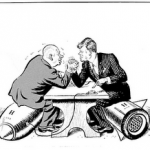
    IN FACT WHAT THE WORLD NEEDS NOW IS A C-2 … THE USA AND CHINA MAKING A CONCRETE STEP FORWARD ON COPING WITH A CHANGING CLIMATE THAT IS LIKELY HUMAN INDUCED. THE FIRST STEP IS ALWAYS THE HARDEST, NOT JUST THEIR NICE WORDS AND SMILES, BUT REAL ACTION.

    #2. ANOTHER APPROACH WOULD BE TO LOOK AT THE ATMOSPHERE AS NATURE’S BANK. THE RICH COUNTRIES BORROWED FROM NATURE THE QUALITY OF THE ATMOSPHERE BY EMITTING LARGE AMOUNTS OF CO2 TO DEVELOP THEIR ECOMONIES. AS EVERYONE KNOWS, WHETHER RICH OR POOR, TO BORROW FROM A BANK YOU MUST PAY BACK THE BANK SO THAT OTHERS CAN BORROW FROM IT. USING THIS ANALOGY, THE DEVELOPED ECONOMIES MUST TAKE THE FIRST STEPS TO CUT BACK THEIR EMISSIONS SO THAT THE DEVELOPING ECONOMIES CAN BORROW FROM NATURE’S BANK (E.G., SO THE DEVELOPING ECONOMIES CAN INCREASE THEIR GREENHOUSE GAS EMISSIONS, AS THE INDUSTRIALIZED COUNTRIES CUT BACK SO THAT AT LEAST THERE IS NO INCREASE IN TOTAL GAS EMISSIONS TO THE ATMOSPHERE).

    #3. A THIRD IDEA … A BAD ONE … IS TO RESORT TO GEOENGINEERING OF THE CLIMATE SYSTEM BY MIMICKING A VOLCANO (PUTTING DEBRIS IN THE STRATOSPHERE TO COOL DOWN THE PLANENT TEMPORARILY; OR PUTTING MILLIONS OF MIRROS IN SPACE TO REFLECT INCOMING SOLAR RADIATION; OR EVAPORATING SEAWATER TO MAKE LOWER CLOUDS WHITER TO RELECT SUN’S RAYS, ETC. THESE ARE REFERRED TO AS “PLAN B” IF GOVERNMENTS CANNOT CONTROL CO2 EMISSIONS. BUT AS A PROTESTER’S SIGN SAID AT COP 15 IN COPENHAGEN TWO YEARS AGO, “THERE IS NO PLANET B.” This brings to mind concepts like “spaceship earth”, lifeboat ethics”, “tragedy of the commons” (see the source of the following collage) http://tragedyofthecommons.weebly.com/spaceships-and-lifeboats.html)

    EARTH IS THE ONLY PLANET WE HAVE AND WE MUST NOT EXPERIMENT WITH ITS CLIMATE. HOWEVER, SCIENTISTS IN THE INDUSTRIALIZED COUNTRIES ARE BUSY GETTING RESEARCH FUNDS TO STUDY ENGINEERING WAYS TO ALTER THE GLOBAL CLIMATE!! WHERE ARE THE VOICES OF CONCERN ABOUT IT FROM DEVELOPING ECONOMIES IN THE SOUTH?

    So, what are the deep reasons that no big change, although so many horrible things happened?

    People fear change. It’s as simple as that. even if things are bad, changing things could make things worse.

    Also, no single extreme climate or weather event can be blamed on global warming. We cannot as yet relate horrible natural disasters things today with climate change with any degree of reliability!

    Global warming and increase GHG emissions are analogous to air pollution in the sense that they are creeping environmental changes (incremental increases –hardly noticeable, but they accumulate over time until a crisis emerges. for air pollution today’s level is like yesterday’s and tomorrow’s will be like today’s: no reason to act now. but, in several years those little changes will have added up to a major environmental and health crisis.

    Also, no single state want to take unilateral major steps to improve the global climate, unless others also commit to sacrifice and act at the same time. If one country cuts back on energy use, it fears that others will take advantage of it by not cutting back!

    And do you think climate changes will cause political instability?

    No more so than human greed or fights over desired resources (diamonds in Africa, water in Central Asia, etc). The surprising thing in that the current global economic situation in the world has NOT led to political instability!!!

    In fact so many experts said that the Durban climate conference will achieve no result, because developing countries will never meet the demands of developed countries. So what do you think about that problem and how to solve the complicated problem? By crisis thinking?

    The USA and China MUST get together to start the proverbial climate ball rolling down the hill. Others will join in.

    As for the Durban meeting, as with Cancun, before the COPs 16 and 17 meetings. governments as early as the summer 2011 were suggesting that nothing of substance would happen at the Durban meetings. I believe that they were preparing the public for nothing to happen: it was a self-fulfilling prophecy. In essence, governments and the UN lowered people’s expectations about outcomes from Durban and those lowered expectations could easily be met by the political leaders. People expected less and that is what they got, less.

    [ADDED: As expected, the negotiators have kicked the can down the road to 2020, rather than taking action now. It is considered a victory, but that was because the level of expectation was so low].

    And USA has already quit the Kyoto Protocol, what do you think about the Kyoto Protocol’s future?

    Kyoto Protocol as such is dead. Too many countries did not really want it: oil producers, for example, developing economies, the rich countries.

    With the bad economic environment, do you think the developed countries will get stronger on their stands due to their economic interests?

    Well, as a street proverb goes, “money talks” and the money is in energy use and not in not using it. Many corporations support continued use of fossil fuels and their “bottom line” profits and CEO jobs depend on it, despite words to the contrary.

    There are many companies and government leaders and civil society who want to do something, but nothing gets done.

    i had hoped that COP 17 in Durban would be different, being held in the poorest continent with the most needs and likely to be a major frontline victim of global warming (and having done the least to cause it) but I was hoping only. Maybe some miracle would happen in Durban, but I doubted it.

    a climate change game of rock,scissors,paper? (www.snorgtees.com/)

    WE NEED A C-2, USA AND CHINA. IT WILL REQUIRE BOLD STATEMENSHIP AND I AM NOT SURE OUR COUNTRIES HAVE IT.

    Michael Glantz
    Colorado, USA

  • Whose Flood is it Anyway?

    Whose Flood is it Anyway?

    Floods occur on the earth’s surface in scores of different locations every year. Some cause minor damage, while others can be labeled blockbuster events. For example, consider two major flood episodes from 2011: the tens of millions of dollars in damage from the flooding in Pakistan in summer 2010 and the October floods in Thailand that were the worst in at least 50 years in that country.

    October 2011 floods in Thailand

    When a flood occurs, regardless of the country in which it occurs, a lot of finger-pointing usually takes place, with various elements of society and of government blaming other elements for the extensive loss of life, damage to the built environment and failure in some component of the in-place early warning system. In fact there is often enough blame to go around. A popular Roman adage related to war that has survived over 2000 years captures this reality: “Success has many fathers but failure has none.”

    Rather than comment on a specific flood in a developing country to expound on the title of this editorial—Whose Flood is it Anyway?—I thought it would be interesting to review a flood that occurred in the summer of 2011 in the Upper Midwest region of the highly developed United States of America. The comments that follow were made by victims of this flood and have been taken from a New York Times article (from July 30) written by A.G. Sulzburger, “In the Flood Zone, but Astonished by High Water.” (Note: some comments have been shortened for the sake of brevity, though I’ve been careful to make sure the sentiment of each is right on target). First, some general commentary about one specific area hit hard by the flooding, Dakota Dunes, South Dakota:

    “Developers transformed this mostly barren peninsula at the intersection of two rivers [the mighty Missouri and the Big Sioux] into an exclusive planned community, complete with million dollar homes and a private golf course…”. “They call it ‘The Dunes’ for a reason, the warning went as follows: ‘the rivers put the sand there and the rivers could sweep it away’.”

    “Now, a little more than two decades later, the stately homes … have been evacuated and the 18th hole is six feet under water, as miles of newly built levees strain to this community from surrendering to a historic flood.”

    Now for some brief comments from residents of The Dunes. Several residents made statements about their misconception of the risk and unpredictability inherent to living on a flood plain, even when such an area has been managed by scientific engineering and modern technology:

    “Many residents said they never imagined this chain of events.”
    “I didn’t think this [flooding] was an issue.”
    “Most [people] did not take out flood insurance because they thought the Missouri had been tamed by a system of dams and reservoirs.”
    “A river makes an unpredictable neighbor.”
    “People revisited longstanding questions about whether government flood insurance, dams and levees encourage people to take unnecessary chances.”
    “Most people don’t understand what flood risk is.”
    “They assume there is a level of protection with levees and dams.”

    Others believed that the managed area of the flood plain was safe because of how they choose to interpret government assurances of security and because of how their personal experiences reinforce those interpretations of security. This framing of security also influenced many individuals’ responses to the flood, especially in their feeling entitled to compensation for the government’s perceived failure to keep them safe, even after they were warned otherwise:

    “If I had to do it again, I’d buy a house in the same place. The flood was an aberration.”
    “Many people in these higher risk areas [lower areas like “The Dunes”] mistakenly believed that a flood could not happen more than once in a century.”
    “Government flood risk maps led to a false sense of security if your location was outside the flood zone’s borders.”
    “Initially developers urged homebuyers to get insurance but later dropped the advice given that the upstream dams had apparently tamed the rivers.”
    “Some homeowners refused to have levees placed on their property at the government’s expense. Soon, with the threat of the flood they paid for it themselves.”
    “Homeowners typically dropped the insurance after several dry years.”
    “Even when the Army Corps of Engineers (ACE) warned of increased river flow and water releases from the dam, the people thought the warnings were overstated.”

    “The victims of the flood who did not want to buy insurance now wanted the government to pay for the flood damage. They hoped for federal help to rebuild.”

    Still others, which may be a product of human nature, chose to live with the risk because the aesthetics of living in the area of ‘The Dunes’ was seen to outweigh the risks, a decision reinforced by a frame that portrays any possible location as having inherent risks:

    “Residents said they would return to their homes for a variety of reasons, especially the natural charm of the area.”
    “We are staying. There is risk everywhere: there’s risk in Arizona fires, in Florida hurricanes, in California for earthquakes.”
    Given the comments above, one can legitimately ask the questions about this particular flood situation to find out “Whose Flood it was?”

    My thoughts:

    Was it the developers (who developed an area they called The Dunes, known to have been created by sand deposits from the rivers)? Was it the Army Corps of Engineers (that built the structures that led people to believe they were protected by dams, reservoirs and levees)? Was it the government that failed to force those in the flood plain to buy flood insurance)? Was it the fault of the land-use planners (those who drew up the risk maps for the area)? Was it the fault of the local government (allowing development in a vulnerable intersection of two major rivers)? Was it the fault of the science educational system (that did not teach people how to interpret probabilities)? Was it the fault of the homeowners as victims (because they did not learn about the risks of hazards in their community or because they seemed to have had a blind faith in engineering that would protect them)? Was it a problem of human nature (risks be damned; I want to live here because it is so beautiful)?

    blame others.

    The fact is that in every flood situation there is a mix of responsible parties with some bearing large portions of the blame and others less. The tendency, however, has been to focus on one party to take the lion’s share of the blame, to be a proverbial scapegoat for the flood-related loss of life and property. Doing so, however, is unlikely to minimize the risk to the hazard, though it does make some people and some agencies feel better that they found someone else to blame… until the floods return again and the blame game starts anew.

  • True Believers and Naysayers – Durban, S. Africa

    True Believers and Naysayers – Durban, S. Africa

    Views on climate change negotiations converge at COP17

    – Durban, South Africa

    The views of those setting up the COP 17 event in South Africa, many negotiators and skeptics’ seem to have converged. Generally speaking, no one believes that anything of value will take place at the conference as a step toward an agreement to restrict let along roll back carbon dioxide emissions in the near term. Their views converge for different reasons.

    Strange Bedfellows?
    The naysayers (a category that includes legitimate skeptics as well as deniers) revel in the release of the second set of emails by unknown hackers in advance of the COP 17 round of Kyoto Protocol-related negotiations. They lobby that unnamed evil forces have rigged climate change science in order to make money by shifting societal dependence on fossil fuels to renewable energy sources (they called the climate change issue a hoax).

    For their part negotiators have been disheartened ever since the crash of hopes and expectations in Copenhagen at COP 15 in December 2010. Since the summer of 2011 (maybe even earlier), following the COP 16 non-plus meeting in Cancun, Mexico, expectations were lowered to such a level that anything at all appearing as some sort of political consensus might be viewed as success of sorts. Those in charge of overseeing the negotiation process lowered expectations of success. In other words negotiators as well as onlookers were told to expect less from the COP process and, sadly, it is easier for governments to meet lowered expectations than to match elevated ones. So, yea-sayers and naysayers now agree that the UNFCCC Conference of Parties process is one of window-dressing with nothing of substance in the window. This gives proof to the saying, “nothing ventured, nothing gained.”

    Glantz modification of Davies J-curve <www.fragilecologies.com>

    Apparently this is the first of recent COPs in which no American congressperson has attended: too busy they say; too far says others; not a major conference says still others. The naysayers’ side point to the hacked emails of “climategate” (it should have been called ‘email-gate’) to claim victory. And the governments leading the push for control on greenhouse gas emissions now point to the financial crisis that plagues them: sorry, no funds can be spared now (to spare the Planet’s inhabitants of foreseeable dire global warming consequences).

    The truth of the matter is that the major polluting governments are really reluctant to deal with the heart of the matter, economies fueled by and dependent on fossil fuel availability and use. There was no will to attack climate change before the financial crisis when money was available and it is likely that after the financial crisis has been resolved some years down the road they will still find other reasons to continue “business as usual” with regard to fossil fuel consumption.

    Killing the hope for and the prospects of success at least in the near to mid term from the climate change negotiating process has been achieved. Governments are still not taking seriously the need to avert foreseeable adversities that are associated with global warming. While the current set of political leaders might not be alive to see the adversities, their younger yet-to-be-chosen successors will. By then we will likely be in a climate-related disaster bubble from which there would be little chance of escape.

  • Violence in Mexico: What’s the Cold War got to do with it?

    Violence in Mexico: What’s the Cold War got to do with it?

    Mexico is plagued (the correct choice of words. Another might be infested) with gangs that live and die by violence. While philosophers and economists have labored for centuries about how to put a monetary value on a human life, in Mexico today the value of life to any one of those drug-related gangs is but a few dollars, the cost of a bullet or two.

    There is no line drawn between the guilty targets of one gang against a rival gang and innocent bystanders. It seems that the gangs are trying to intimidate their rival gangs by killing innocent bystanders in the area controlled by their rival gangs. When they can’t strike out at each other they strike out at innocent people. Anyone, anywhere — butcher, baker, candlestick maker — has become fair game in this Mexican style “proxy gang war.”

    Proxy wars were common during the Cold War decades. The Soviet Union and the United States were engaged in an ideological do-or-die war of ideologies with each superpower backed up by its large and growing nuclear arsenal. But because both countries possessed nuclear weapons, they sought to avoid a heated conflict that could potentially escalate into a hot nuclear conflict. So, they resorted to the use of proxy combatants with each superpower supporting one or the other side in a conflict: north vs south Korea, north vs south Vietnam, east vs west Germany, Chang Kai Shek’s China vs Mao Tse Tung’s China, and so it went right up to the collapse of the Soviet Union in the early 1990s.

    Much of the Cold War rhetoric was centered on terror tactics of which there were two types, one focused on force and the other focused on value. Force meant one country would threaten to strike at the army of the other: if you strike first, we will go after your military bases and other installations. The second type was based on value or threatening to strike back at non-military (soft) targets such as highly populated urban centers, if provoked.

    Strategies were then developed to counter such types and were called counterforce and countervalue, with follow up programs to harden the defense capabilities of urban areas as well as military establishments.

    So, can the Cold War serve as an analogue to current situation in Mexico?

    The situation in Mexico, as I see it, is one of a “proxy war” that is focused on value: that is, where rival drug gangs seek to intimidate each other by going after the public within the territory of its rival gang to expose vulnerabilities and the proverbial Achilles heel of the rival gang. The government is helpless and apparently hapless in protecting its citizens. It has no counter value strategy and cannot guarantee the safety of its citizens.

    The question then becomes, who needs a government that cannot protect it from hostile forces? Isn’t this one of the basic inalienable rights of citizens in their exchange for loyalty to the government, sort of an unwritten social contract between governed and governors?

    What then is the government to do — business-as-usual by letting the rampant violence continue while protecting enclaves of the wealthy within the country? Or should it concede that the situation within its borders is out of its control and call for international assistance to go after the destabilizing gangs?

    the people protest drug wars in Mexico, 2011

    To do nothing would be to allow for a situation like the one that exists far away in the heart of Africa, in the Congo in the heart of Africa to continue. A government that accepts the status quo — violence in areas out of its control, is accepting “anomie” a situation in which unstructured violence can prevail. [NB: ” French sociologist Emile Durkheim used the concept ‘anomie’ to talk about the dangers that people in modern societies experienced. He constructed this French word ‘anomie’ (meaning without ‘norms’ or social laws) to describe the dysfunctional aspects of modern societies.” (yahoo.com)]. Does this describe what is happening to our neighbor to the South?

    America’s hands are not clean. Americans buy the drugs that those gangs illegally send North to us. In large measure Americans have a collective responsibility for what has happened to Mexico.

    Is it too late to reverse the violence to the South or the drug use to the North? Only time will tell, but there is not a lot of time left to resolve this situation. Sometimes it makes me think of the movie “Mad Max.”

  • What comes after a post-service society? – oligarchy

    What comes after a post-service society? – oligarchy

    The three major stages of economic development are as follows: the primary sector, dependent on the exploitation and sale of primary resources such as forests and mineral resources; the secondary sector is based on manufacturing and the tertiary sector is based to a large extent on providing services. As noted elsewhere, the 1950s and 1960s saw discussion of the possibility of an emerging post-industrial society. Well, we are there now in America. In fact we seem to be nearing the end of it, in large measure as a result of outsourcing not only our manufacturing activities but now our services as well. My lament was captured in the question, “what happens in a post-service society such as ours? What’s next? Yesterday I did not know. Today I think I do. Tah Dah! An oligarchy.

    America is well on its way to becoming a full-fledged oligarchy, that is the rule of a few for the benefit of a few. Here are some definitions of oligarchy.

    1) a small group of people having control of a country, organization or institution; (2) a state governed by such a group; (3) a form of government in which all power is vested in a few persons or in a dominant class or clique; (4) power essentially rests with a small group.

    The lowest points in the decade of the oligarchs. Worse is yet to come?
    The lowest points in the decade of the oligarchs. Worse is yet to come?

    It seems that the oligarchy becomes the “last social class still standing,” having weakened or destroyed the power, means and will of other classes in society. Media moguls, political party leaders, congresspeople, Fortune 1000 CEOs, and the like, hold sway over which laws get proposed, which laws are passed and which ones are rejected. The Supreme Court members as well are among the ruling elite.

    A major difference between our oligarchy and those of earlier times in other places is that the American public is super-polarized now by political, economic and cultural ideologies. It has increasingly becoming a country of one-issue voters, who often end up voting against their own long-term personal and class interests. They are somehow convinced that all taxation is bad, even of the super-rich. They believe that public education is a waste of money, that religious schools should receive public monies, they believe they should be able to divert contributions from social security into the stock market despite the decadal market crashes. They support candidate of big business who support and foster outsourcing of American jobs. They support people who see corporations as deserving legal rights equal to those that people have. They seem to support lawmakers who so no to everything that a non-white president favors without having to give substantive arguments as to why.

    We have become a nation of sheep. We follow whomever we think should be the leader. We oppose change out of ignorance. We do not understand issues that we vote on or people that we vote for. We take irrational stances on issues that directly affect the country’s and their own personal well being in the long run.

    Sadly, it seems that America is well on the way to becoming a nation “of the oligarchs, by the oligarchs, and for the oligarchs.” The Golden Rule seems to prevail yet again: those with the gold make the rules…even in a so-called democracy. It is different today as well, for the Golden Rule is out of control of anyone, except the oligarchs, as they vote themselves laws forbidden that they be taxed. So many workers pay more taxes than do many a wealthy corporation (GE, EXXON, etc) or a CEO of a Fortune 500 company, thanks to Bush’s tax breaks for the rich.

    NB: The Bush image is on www.newser.com

    NB2: The medicare slogan underscores ignorance of some voters who do not realize Medicare IS a government program! Such signs have appeared at Tea Party rallies in the USA.

  • A Funny Thing Happened on the Way to Another Country

    A Funny Thing Happened on the Way to Another Country

    Reflections from my hotel, about to leave for the airport to go home…

    I came to realize that the mighty US dollar is mighty no more. Its value compared to other currencies seems to be moving southward. Soon I fear it will be equal to the peso or dinar, or rupee or yuan. The prices everywhere move up at the same time the dollar’s purchasing power declines.

    It used to be that the US dollar was a cherished, sought after commodity. Not so now. In Japan, for example, the value of the dollar dropped in only twelve months mind you from 94 yen to the dollar to 72 yen to the dollar at a Tokyo bank. Prices for goods and services in yen seem to have remained the same.

    I have been hearing ever since I can remember that a comparatively weaker dollar is good for the US economy because it encourages others outside our borders to buy our products. But, now I ask, what products? What do we make in the USA?  What is it that we manufacture in the USA that others are seeking to buy in great quantity? What’s left that says on the label “Made in the USA”? We’ve outsourced a lot of it. In fact we have become primarily a service society, a society of paper-pushers. But wait… now we are outsourcing our services too. We’ve cheapened the real and the perceived value of the dollar and getting nothing of benefit in return; a formula for a downward spiral of America’s prosperity.

    "Are we there yet?"
    the Great American Depression: Are we there yet? Now apples are a buck each!

    Decades ago in the 1960s there were several books around the theme of a post-industrial society. They recounted the mantra of developing economies where as economic development occurs a country moves from dependence on selling off its natural resources (wood, ore, oil, etc) and dependence on working the land to a manufacturing-based economy and then nirvana — a service-based economy.

    At each of these three stages personal wealth and well-being improved for many people as did the quality of life. But, what follows a post-service society? What do America’s potential workers have to look forward to? These are uncharted waters, as far as I can tell. Will the future be a crumbling of that great service society, a crumbling that ratchets everyone down to lower levels of well-being (except those who benefit from the end of society as we know it)? Will it be a new, fourth, even higher level of development than before or might it be a logical return to producing something of real value instead of a society of workers whose purpose is to shuffling papers across a desk or transact in the virtual work of the Internet? Are we producing an army of unemployable citizens? I hope not.

    I don’t know what the future holds for the fourth stage — a post-industrial society, but I sure do hope smarter people than me are thinking seriously about it. (and I don’t mean two-handed economists or politicians who blather about the future but have no real clue about what to do: “on the one hand… blah blah blah, but on the other hand blah blah blah…”)

    My cynical side says they are not. WTF?