
Category: Disasters

  • Whose Flood is it Anyway?

    Whose Flood is it Anyway?

    Floods occur on the earth’s surface in scores of different locations every year. Some cause minor damage, while others can be labeled blockbuster events. For example, consider two major flood episodes from 2011: the tens of millions of dollars in damage from the flooding in Pakistan in summer 2010 and the October floods in Thailand that were the worst in at least 50 years in that country.

    October 2011 floods in Thailand

    When a flood occurs, regardless of the country in which it occurs, a lot of finger-pointing usually takes place, with various elements of society and of government blaming other elements for the extensive loss of life, damage to the built environment and failure in some component of the in-place early warning system. In fact there is often enough blame to go around. A popular Roman adage related to war that has survived over 2000 years captures this reality: “Success has many fathers but failure has none.”

    Rather than comment on a specific flood in a developing country to expound on the title of this editorial—Whose Flood is it Anyway?—I thought it would be interesting to review a flood that occurred in the summer of 2011 in the Upper Midwest region of the highly developed United States of America. The comments that follow were made by victims of this flood and have been taken from a New York Times article (from July 30) written by A.G. Sulzburger, “In the Flood Zone, but Astonished by High Water.” (Note: some comments have been shortened for the sake of brevity, though I’ve been careful to make sure the sentiment of each is right on target). First, some general commentary about one specific area hit hard by the flooding, Dakota Dunes, South Dakota:

    “Developers transformed this mostly barren peninsula at the intersection of two rivers [the mighty Missouri and the Big Sioux] into an exclusive planned community, complete with million dollar homes and a private golf course…”. “They call it ‘The Dunes’ for a reason, the warning went as follows: ‘the rivers put the sand there and the rivers could sweep it away’.”

    “Now, a little more than two decades later, the stately homes … have been evacuated and the 18th hole is six feet under water, as miles of newly built levees strain to this community from surrendering to a historic flood.”

    Now for some brief comments from residents of The Dunes. Several residents made statements about their misconception of the risk and unpredictability inherent to living on a flood plain, even when such an area has been managed by scientific engineering and modern technology:

    “Many residents said they never imagined this chain of events.”
    “I didn’t think this [flooding] was an issue.”
    “Most [people] did not take out flood insurance because they thought the Missouri had been tamed by a system of dams and reservoirs.”
    “A river makes an unpredictable neighbor.”
    “People revisited longstanding questions about whether government flood insurance, dams and levees encourage people to take unnecessary chances.”
    “Most people don’t understand what flood risk is.”
    “They assume there is a level of protection with levees and dams.”

    Others believed that the managed area of the flood plain was safe because of how they choose to interpret government assurances of security and because of how their personal experiences reinforce those interpretations of security. This framing of security also influenced many individuals’ responses to the flood, especially in their feeling entitled to compensation for the government’s perceived failure to keep them safe, even after they were warned otherwise:

    “If I had to do it again, I’d buy a house in the same place. The flood was an aberration.”
    “Many people in these higher risk areas [lower areas like “The Dunes”] mistakenly believed that a flood could not happen more than once in a century.”
    “Government flood risk maps led to a false sense of security if your location was outside the flood zone’s borders.”
    “Initially developers urged homebuyers to get insurance but later dropped the advice given that the upstream dams had apparently tamed the rivers.”
    “Some homeowners refused to have levees placed on their property at the government’s expense. Soon, with the threat of the flood they paid for it themselves.”
    “Homeowners typically dropped the insurance after several dry years.”
    “Even when the Army Corps of Engineers (ACE) warned of increased river flow and water releases from the dam, the people thought the warnings were overstated.”

    “The victims of the flood who did not want to buy insurance now wanted the government to pay for the flood damage. They hoped for federal help to rebuild.”

    Still others, which may be a product of human nature, chose to live with the risk because the aesthetics of living in the area of ‘The Dunes’ was seen to outweigh the risks, a decision reinforced by a frame that portrays any possible location as having inherent risks:

    “Residents said they would return to their homes for a variety of reasons, especially the natural charm of the area.”
    “We are staying. There is risk everywhere: there’s risk in Arizona fires, in Florida hurricanes, in California for earthquakes.”
    Given the comments above, one can legitimately ask the questions about this particular flood situation to find out “Whose Flood it was?”

    My thoughts:

    Was it the developers (who developed an area they called The Dunes, known to have been created by sand deposits from the rivers)? Was it the Army Corps of Engineers (that built the structures that led people to believe they were protected by dams, reservoirs and levees)? Was it the government that failed to force those in the flood plain to buy flood insurance)? Was it the fault of the land-use planners (those who drew up the risk maps for the area)? Was it the fault of the local government (allowing development in a vulnerable intersection of two major rivers)? Was it the fault of the science educational system (that did not teach people how to interpret probabilities)? Was it the fault of the homeowners as victims (because they did not learn about the risks of hazards in their community or because they seemed to have had a blind faith in engineering that would protect them)? Was it a problem of human nature (risks be damned; I want to live here because it is so beautiful)?

    blame others.

    The fact is that in every flood situation there is a mix of responsible parties with some bearing large portions of the blame and others less. The tendency, however, has been to focus on one party to take the lion’s share of the blame, to be a proverbial scapegoat for the flood-related loss of life and property. Doing so, however, is unlikely to minimize the risk to the hazard, though it does make some people and some agencies feel better that they found someone else to blame… until the floods return again and the blame game starts anew.
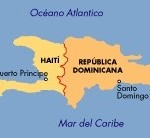
  • “Haiti: Wither thou goest?”. Mickey Glantz. January 17, 2011

    “Haiti: Wither thou goest?”. Mickey Glantz. January 17, 2011

    “Haiti: Wither thou goest?”. Mickey Glantz. January 17, 2011

    The Republic of Haiti sat on a wall.
    The Republic of Haiti had a great fall.
    All the Great Powers and all the UN
    Couldn’t put Haiti together again.
    Or so it seems. Why not?

    Haiti is a country with about 10 million inhabitants, almost 50 percent of which are 15 or under. It gained independence from France in 1804. It has had problems of various kinds since then, but not because of its independence. Throughout its history, it has only sporadically had what might be called a good government. It is quite clear that in the 20th century Haiti has not really seen a good government, at least as far as I can tell.

    I read a popular history of Haiti written in 1954 and it was not flattering to US involvement in the country in the form of “gunboat diplomacy” in the first half of the 20th century. Papa Doc Duvalier came to power in 1957 and was a brutal dictator until the late 1970s when his 19 year old son took over, Baby Doc. Every government knew about the corrupt and brutal dictatorships but did nothing to help the Haitian people until riots brought down the Baby Doc regime. Off to France he went, into exile with the alleged $300 million he stole from his impoverished people.

    The country is still a mess, even more so following the January 2010 earthquake. Tens of thousands of people are still living in tent towns, surviving with access only to minimal resources. A cholera outbreak in parts of Haiti have made the devastating situation in the western third of the island of Hispanola even worse. It seems that in Haiti when one crisis is dealt with two pop up in its place. The island nation seems unable to get a break from a constant stream of bad news.

    This week, in the midst of the anniversary of the great earthquake 2010, the former ruthless dictator, Jean-Claude “Baby Doc” Duvalier — deposed 25 years ago — chose to return to the country, allegedly to see how he could help it. The motive for his return, though, is not really known. He was a deadly corrupt dictator who jailed, tortured or had killed those who opposed his rule. His father, Papa Doc Duvalier, and his private army (Tonton Macoute) were much worse. They were evil. Thanks to the security blanket called national sovereignty, the United Nations did little to protect Haitian civil society from the wrath of the Duvaliers. Sadly, the USA also did little for the Haitians, probably because of its strategic geographic location … facing Cuba. A large portion of the Haiti’s young population are unaware of the horrors carried out by the Duvaliers.

    Today, there are lots of NGO activities, aid programs and bilateral agreements between Haiti and other countries, each of which is trying to help the people. Yet, the people still suffer in great numbers, as there are more than these humanitarian efforts can help at any given point in time. The land surface is denuded. A large portion of the general population is not well educated, health problems afflict all ages, unemployment abounds, and most of the people are dirt poor. Making living conditions worse, the land surface has been deforested making the country prone to mudslides and rainfall runoff. But why is Haiti in such poor condition with so much assistance offered to the country before, during and after the deadly earthquake?

    What is needed is radical, out-of-the-box thinking to break the downward spiral. Industrialized as well as industrializing countries such as Brazil and China have to step up, take charge on behalf of the citizens of Haiti and develop this small impoverished country.

    There are other ideas as well. It seems that Haiti needs a new territory to inhabit (none to be found or offered). If not, it needs an enlightened honest government, a reliable flow of assistance, widespread reforestation, medical facilities, access to nutrition, and jobs, etc. A really radical (some will say retro) way to give Haitians a chance to get those things would be if the country were made a Mandate of the United Nations. Under the League of Nations, former German and Italian colonies were made Mandates after WWI put into the care of other (victor) nations. The UN Community of Nations would then take on the responsibility to create a sustainable Haiti within a fixed period of time.

    League of Nations Mandate

    If the collective wisdom of the industrial world world cannot collectively help to develop a small country with 10 million inhabitants, then it should stop telling billions of people in developing countries that there is hope for their economic development prospects and improved well being.

    Success with Haiti would provide inspiration to other countries in the Fourth World (the bottom half of the Third World) that there is a bright light for them as well at the end of the economic development tunnel.

  • “It’s the 100th day since the start of the BP leak in the Gulf of Mexico …  But, it’s the 13,000th day(!) since the discovery of the Gulf ‘s Dead Zone.” Michael Glantz. 29 July 2010.

    “It’s the 100th day since the start of the BP leak in the Gulf of Mexico … But, it’s the 13,000th day(!) since the discovery of the Gulf ‘s Dead Zone.” Michael Glantz. 29 July 2010.

    “It’s the 100th day since the start of the BP leak in the Gulf of Mexico …
    But, it’s the 13,000th day(!) since the discovery of the Gulf ‘s Dead Zone”

    Michael Glantz. 29 July 2010.

    Well, the leaking oil well on the Gulf of Mexico seabed has finally been capped. Soon it will be recorded permanently in historical records as the worst environmental disaster in the US history to date, beating out the Exxon Valdez oil spill (where was that spill? Prudhoe Bay, Alaska. Most people don’t remember that). Soon, I believe most Americans (except those along the Gulf Coast) will put the BP leak — despite its widespread environmental damage and huge ecological, economic and social costs — in the back of their minds (who remembers the Torrey Canyon spill or the Amoco Cadiz spill?). I call that “discounting the past,” that is, societies think that history is of decreasing value as one looks back in time. It’s the opposite of what economists refer to as “discounting the future” of, say, the dollar.

    Back in 1974, Dr. R. Eugene Turner, Director of Coastal Ecology Institute at Louisiana State University, discovered a “dead zone” in the Gulf of Mexico. The dead zone is the result of runoff from cities, farmlands, feedlots and factories into the mighty Mississippi River. This River basin drains about 40% of the continental United States. Herbicides, pesticides, fertilizers among other chemicals are released on a routine basis throughout the basin. In the springtime they accumulate of the Gulf Coast forming an 8000+ square mile region, which adversely affects all living marine resources.

    Each year the dead zone increases in size and has an increasingly negative impact on the fish population and in turn on the commercial fisheries. As I wondered in an earlier podcast titled “Pick Your Poison!”, why has there been no constant, even deafening, uproar about either the causes or the consequences of the ever-increasing dead zone? Although it is not the only dead zone in the world (there are an estimated 300 of them of varying sizes worldwide), it is OUR dead zone.

    While in the midst of having a coffee at a local Starbucks, I began to jot down a few ideas about a comparison between the BP spill and the dead zone. The ideas herein do not represent the results of a systematic review but are only first-order thoughts. Such a comparison would make for an interesting class project or paper. Feel free to send me your thoughts, comments, corrections and additional comparisons related to the chart below.

  • “Haiti Cherie says Haiti is my Beloved Land. Oh, I never knew that I have to leave it to understand…” Mickey Glantz. January 14, 2010

    I was introduced to the song “Haiti Cherie” on a Harry Belafonte album released in 1957, the year I graduated high school and then entered university as a beanie-wearing freshman. The song, the whole album in fact, turned out to soothe the ruffled feathers of a naive young boy starting the rest of his life away from the security of the family nest. belafonte

    The deadly devastating earthquake of January 12, 2010, brought to mind Belafonte’s various songs of the Caribbean and especially Haiti Cherie. I have long been interested in Haiti though I have never visited the country. Its history has been in some instances interesting and in other instances sad. In the early 1800s (1802 actually) the black leader (later, King) Christophe overthrew French rule on Haiti’s half of the island of Hispanolachristophe-easton-102

    (Yesterday, in his infinite stupidity, Reverend Pat Robertson referred to this independence from France as “Haiti having made a pact with the devil 200 years ago” and that was the reason for the earthquake).

    When I was growing up, Haiti was plagued by the rule of Papa Doc Duvalier and his army of thugs—the Tonton Macoute—that kept the people under control through unfathomable horror tactics. Duvalier’s son, Baby Doc, followed his father’s rule and also relied on the support and protection of the Tonton Macoute, but the island’s economy was already in shambles. All demographics about the country were abysmal.
    papadocbabydoc

    They ruled with an iron fist and fear of voodoo
    They ruled with an iron fist and fear of voodoo

    I learned early on that Haiti was the poorest country in the Western Hemisphere. I also learned that in the 1960s it was receiving the most U.S. aid per capita in the Western Hemisphere, most likely because of its proximity to Castro’s communist Cuba. I have to assume that a lot of that assistance went to the military and to corrupt government officials. Then, Haiti was poor, undernourished, mostly illiterate, and the poor were living in such squalor and amid degradation that it would’ve been generous to call their habitats slums or shantytowns. But, somehow, the poor of Haiti managed to survive.

    I also recall hearing about Haitian immigrants seeking refuge in America on overloaded boats and small crafts, even inner tubes, on the hopes of getting to the Florida coast, much as their Cuban neighbors had done. The difference is that the Haitians were sent back home, allegedly because they were not political refugees as the Cubans claimed but because they were labeled as economic refugees. Cubans could stay; Haitians had to go.

    Haitian boat refugees seeking a better life in America
    Haitian boat refugees seeking a better life in America

    Fast forward to the stories now unraveling about the deaths, suffering and devastation of the people on one of the poorest nations on the earth. Countries and groups that were before unconcerned about the poverty of Haitians are now pouring out their hearts, souls and funds to somehow help the people of Haiti in their moment of need. It is likely the wrong time for me to bring up the fact that all governments knew of Haiti’s poverty—of women feeding kids salt-flavored clay wafers to fill their bellies with anything that could ward off hunger pains, of Haiti’s chronic hunger, of Haiti’s treatable water-borne illnesses, of Haiti’s squalor in its settlements, that the productive land surface of the country has vanished, that the Haitian population is illiterate by half and unemployed by three-fourths.

    What we are witnessing in this global reaction to Haiti’s earthquake is a human response to a cataclysmic event: Sympathy, empathy in some cases, a desire to help Haitians in any way in their moment of dire need. All of the ingredients for a crisis had been visible for all to see.

    msf: doctors without borders, Haiti
    msf: doctors without borders, Haiti

    Many non-governmental organizations and aid agencies have been for years engaged in trying to bring Haitians a better life. However, the big money, either from governments bilaterally or international aid agencies multilaterally, was not enough to even scratch the surface of Haiti’s numerous problems or was provided in uncoordinated ways that did not help the country become self sustaining. Haiti was neglected in the past, and if other complex humanitarian crises are any indicator of what is to follow in a year or two or three, Haiti will be neglected in the future.

    Is there a concentrated effort equivalent to what went into the “Manhattan Project” that could be sparked by the current sad plight of the Haitian people that could help the Country surpass a tipping point that would enable it to provide a good, productive and healthy life for its citizens? There must be. Why can’t rich countries tandem with one of the poorest to bring its standard of living up? Why is it so easy to find money for a war or money for a disaster but not for attempts to improve the vulnerability of the lives and livelihoods of the poor?
    The optimist in me says it can be done if the will of governments exists to do it. The cynic in me suggests that the dark side of human nature —greed, corruption, self-interest —will likely rule the day. Maybe the upcoming younger generation of policy makers can show my generation why and how the dark side must be changed or contained.

    The bottom line is as follows: Who has responsibility for the well-being of people living in countries in the Fourth World?

    Donations to assist organizations working in Haiti’s relief efforts can be made through the Clinton Foundation. http://www.clintonfoundation.org/haitiearthquake/clintonfoundation

  • “No Disaster Recommendations without Ramifications”:

    MICKEY GLANTZ

    SUNDAY, 24 MAY 2009

    Every assessment of a disaster, where natural or human-caused, has begins and ends with a list of recommendations or lessons learned. I have done that in my reports as well for almost four decades. The recommendations or lessons are about “how to get it right the next time there is a similar disaster?” That is always the hope. That is always the dream.

    Many of those recommendations or lessons learned are right on target in terms of requirements needed to reduce the adverse impacts of the hazards of concern. They are the result of serious scrutiny of hazards, their impacts and societal responses to them. They are the findings through serious discussion, brainstorming and plain common sense of what went right, what went wrong, and what wasn’t considered. For Katrina, for example, America’s most costly and most embarrassing so called natural disaster, one can find thousands of lessons learned from various levels of government from local to global, industries and businesses. That is the good news. However, it is, all too often, the good news in theory only. I say in theory because of a gut feeling have: that most recommendations are not acted upon. Phrased a different way, the disaster lessons we have been calling ‘lessons learned” are really not learned but only identified. When they are addressed they can legitimately be called lessons learned. Otherwise, they should be called “lessons identified”.

    The problem in all this is that when recommendations and lessons have been identified, many observers in all walks of life tend to think that the recommendations and lessons are being enacted in order to avoid similar hazard-related disasters in the future. Given the reality of an issue-attention cycle of the American public that lasts but a couple of years (as identified by Anthony Downs in the early 1970s), for example, the public turns to focus on other pressing issues, no longer focusing on the previous disaster and its recommendations. How then can we get decision makers to take recommendations or lessons more seriously? How can we get them to realize that not following up on the lessons can have considerable costs?

    It is essential to break the vicious cycle of disaster—lessons & recommendations— disaster — same lessons, etc. Many of the same lessons appear decade after decade. Our children and our children’s children will end up reading the same sets of disaster-related recommendations and lessons that our predecessors and we have been identifying. We can end the vicious cycle in the name of progress. It is a simple next step to take.

    My recommendation:

    Recommendations (and lessons learned) should no longer be presented without comment on what the consequences might be if the recommendations (and lessons) are not addressed. This way, decision makers can explicitly be made aware that there is also a likely cost for inaction when the next natural hazard turns into a national disaster. Succinctly stated, “NO RECOMMENDATIONS SHOULD BE OFFERED WITHOUT ALSO NOTING THEIR RAMIFICATIONS.”

    The ramification (if the recommendation is not acted upon):

    Business as usual (BAU) with regard to identifying lessons and making recommendations in post-disaster assessments will mean that policy makers in the future will continue to receive lists of lessons that had already been identified over previous decades and, as a result, their societies will continue to remain at risk to the impacts of hazards for which risks could have been reduced, had recommendations been pursued and identified lessons applied.