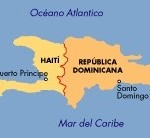
Tag: Haiti

  • “Haiti: Wither thou goest?”. Mickey Glantz. January 17, 2011

    “Haiti: Wither thou goest?”. Mickey Glantz. January 17, 2011

    “Haiti: Wither thou goest?”. Mickey Glantz. January 17, 2011

    The Republic of Haiti sat on a wall.
    The Republic of Haiti had a great fall.
    All the Great Powers and all the UN
    Couldn’t put Haiti together again.
    Or so it seems. Why not?

    Haiti is a country with about 10 million inhabitants, almost 50 percent of which are 15 or under. It gained independence from France in 1804. It has had problems of various kinds since then, but not because of its independence. Throughout its history, it has only sporadically had what might be called a good government. It is quite clear that in the 20th century Haiti has not really seen a good government, at least as far as I can tell.

    I read a popular history of Haiti written in 1954 and it was not flattering to US involvement in the country in the form of “gunboat diplomacy” in the first half of the 20th century. Papa Doc Duvalier came to power in 1957 and was a brutal dictator until the late 1970s when his 19 year old son took over, Baby Doc. Every government knew about the corrupt and brutal dictatorships but did nothing to help the Haitian people until riots brought down the Baby Doc regime. Off to France he went, into exile with the alleged $300 million he stole from his impoverished people.

    The country is still a mess, even more so following the January 2010 earthquake. Tens of thousands of people are still living in tent towns, surviving with access only to minimal resources. A cholera outbreak in parts of Haiti have made the devastating situation in the western third of the island of Hispanola even worse. It seems that in Haiti when one crisis is dealt with two pop up in its place. The island nation seems unable to get a break from a constant stream of bad news.

    This week, in the midst of the anniversary of the great earthquake 2010, the former ruthless dictator, Jean-Claude “Baby Doc” Duvalier — deposed 25 years ago — chose to return to the country, allegedly to see how he could help it. The motive for his return, though, is not really known. He was a deadly corrupt dictator who jailed, tortured or had killed those who opposed his rule. His father, Papa Doc Duvalier, and his private army (Tonton Macoute) were much worse. They were evil. Thanks to the security blanket called national sovereignty, the United Nations did little to protect Haitian civil society from the wrath of the Duvaliers. Sadly, the USA also did little for the Haitians, probably because of its strategic geographic location … facing Cuba. A large portion of the Haiti’s young population are unaware of the horrors carried out by the Duvaliers.

    Today, there are lots of NGO activities, aid programs and bilateral agreements between Haiti and other countries, each of which is trying to help the people. Yet, the people still suffer in great numbers, as there are more than these humanitarian efforts can help at any given point in time. The land surface is denuded. A large portion of the general population is not well educated, health problems afflict all ages, unemployment abounds, and most of the people are dirt poor. Making living conditions worse, the land surface has been deforested making the country prone to mudslides and rainfall runoff. But why is Haiti in such poor condition with so much assistance offered to the country before, during and after the deadly earthquake?

    What is needed is radical, out-of-the-box thinking to break the downward spiral. Industrialized as well as industrializing countries such as Brazil and China have to step up, take charge on behalf of the citizens of Haiti and develop this small impoverished country.

    There are other ideas as well. It seems that Haiti needs a new territory to inhabit (none to be found or offered). If not, it needs an enlightened honest government, a reliable flow of assistance, widespread reforestation, medical facilities, access to nutrition, and jobs, etc. A really radical (some will say retro) way to give Haitians a chance to get those things would be if the country were made a Mandate of the United Nations. Under the League of Nations, former German and Italian colonies were made Mandates after WWI put into the care of other (victor) nations. The UN Community of Nations would then take on the responsibility to create a sustainable Haiti within a fixed period of time.

    League of Nations Mandate

    If the collective wisdom of the industrial world world cannot collectively help to develop a small country with 10 million inhabitants, then it should stop telling billions of people in developing countries that there is hope for their economic development prospects and improved well being.

    Success with Haiti would provide inspiration to other countries in the Fourth World (the bottom half of the Third World) that there is a bright light for them as well at the end of the economic development tunnel.

  • “Haiti Cherie says Haiti is my Beloved Land. Oh, I never knew that I have to leave it to understand…” Mickey Glantz. January 14, 2010

    I was introduced to the song “Haiti Cherie” on a Harry Belafonte album released in 1957, the year I graduated high school and then entered university as a beanie-wearing freshman. The song, the whole album in fact, turned out to soothe the ruffled feathers of a naive young boy starting the rest of his life away from the security of the family nest. belafonte

    The deadly devastating earthquake of January 12, 2010, brought to mind Belafonte’s various songs of the Caribbean and especially Haiti Cherie. I have long been interested in Haiti though I have never visited the country. Its history has been in some instances interesting and in other instances sad. In the early 1800s (1802 actually) the black leader (later, King) Christophe overthrew French rule on Haiti’s half of the island of Hispanolachristophe-easton-102

    (Yesterday, in his infinite stupidity, Reverend Pat Robertson referred to this independence from France as “Haiti having made a pact with the devil 200 years ago” and that was the reason for the earthquake).

    When I was growing up, Haiti was plagued by the rule of Papa Doc Duvalier and his army of thugs—the Tonton Macoute—that kept the people under control through unfathomable horror tactics. Duvalier’s son, Baby Doc, followed his father’s rule and also relied on the support and protection of the Tonton Macoute, but the island’s economy was already in shambles. All demographics about the country were abysmal.
    papadocbabydoc

    They ruled with an iron fist and fear of voodoo
    They ruled with an iron fist and fear of voodoo

    I learned early on that Haiti was the poorest country in the Western Hemisphere. I also learned that in the 1960s it was receiving the most U.S. aid per capita in the Western Hemisphere, most likely because of its proximity to Castro’s communist Cuba. I have to assume that a lot of that assistance went to the military and to corrupt government officials. Then, Haiti was poor, undernourished, mostly illiterate, and the poor were living in such squalor and amid degradation that it would’ve been generous to call their habitats slums or shantytowns. But, somehow, the poor of Haiti managed to survive.

    I also recall hearing about Haitian immigrants seeking refuge in America on overloaded boats and small crafts, even inner tubes, on the hopes of getting to the Florida coast, much as their Cuban neighbors had done. The difference is that the Haitians were sent back home, allegedly because they were not political refugees as the Cubans claimed but because they were labeled as economic refugees. Cubans could stay; Haitians had to go.

    Haitian boat refugees seeking a better life in America
    Haitian boat refugees seeking a better life in America

    Fast forward to the stories now unraveling about the deaths, suffering and devastation of the people on one of the poorest nations on the earth. Countries and groups that were before unconcerned about the poverty of Haitians are now pouring out their hearts, souls and funds to somehow help the people of Haiti in their moment of need. It is likely the wrong time for me to bring up the fact that all governments knew of Haiti’s poverty—of women feeding kids salt-flavored clay wafers to fill their bellies with anything that could ward off hunger pains, of Haiti’s chronic hunger, of Haiti’s treatable water-borne illnesses, of Haiti’s squalor in its settlements, that the productive land surface of the country has vanished, that the Haitian population is illiterate by half and unemployed by three-fourths.

    What we are witnessing in this global reaction to Haiti’s earthquake is a human response to a cataclysmic event: Sympathy, empathy in some cases, a desire to help Haitians in any way in their moment of dire need. All of the ingredients for a crisis had been visible for all to see.

    msf: doctors without borders, Haiti
    msf: doctors without borders, Haiti

    Many non-governmental organizations and aid agencies have been for years engaged in trying to bring Haitians a better life. However, the big money, either from governments bilaterally or international aid agencies multilaterally, was not enough to even scratch the surface of Haiti’s numerous problems or was provided in uncoordinated ways that did not help the country become self sustaining. Haiti was neglected in the past, and if other complex humanitarian crises are any indicator of what is to follow in a year or two or three, Haiti will be neglected in the future.

    Is there a concentrated effort equivalent to what went into the “Manhattan Project” that could be sparked by the current sad plight of the Haitian people that could help the Country surpass a tipping point that would enable it to provide a good, productive and healthy life for its citizens? There must be. Why can’t rich countries tandem with one of the poorest to bring its standard of living up? Why is it so easy to find money for a war or money for a disaster but not for attempts to improve the vulnerability of the lives and livelihoods of the poor?
    The optimist in me says it can be done if the will of governments exists to do it. The cynic in me suggests that the dark side of human nature —greed, corruption, self-interest —will likely rule the day. Maybe the upcoming younger generation of policy makers can show my generation why and how the dark side must be changed or contained.

    The bottom line is as follows: Who has responsibility for the well-being of people living in countries in the Fourth World?

    Donations to assist organizations working in Haiti’s relief efforts can be made through the Clinton Foundation. http://www.clintonfoundation.org/haitiearthquake/clintonfoundation