Slogans to rule by: Street wisdom messages from civil society
COP 15 taught me something. The best messages are the shortest messages. I attended a side event at COP 15, for example. Each speaker gave his 12-minute presentation on one of a range of climate change related issues centered on equity. More specifically, the talks were different perspectives about who should pay what to whom as a result of the saturation of the atmosphere with carbon dioxide and other greenhouse gases.
In retrospect, the speakers gave isolated presentations, each with his (all were men) or his organization’s solutions to cope with the equity aspects of climate change. First of all, most if not all seemed to have equated equity with equality: yet they are overlapping but different concepts. Equity is about fairness; equality is about being equal. Secondly, not one of the speakers addressed points raised by previous speakers. Each came to make his statement that was usually embedded with other information. As a result, it was up to the listener to draw the appropriate conclusion as to his main message. Participants emptied the room after the session, satisfied for having attended and heard a range of papers. But, what were the take-home messages from each of the speakers? Personally, I cannot recall them.
Shift attention now to the streets of Copenhagen. At the end of the first week, there were street protests in the form of rallies and long marches from the center of town to the Bella Conference Center where the COP 15 negotiations were being held. Protesters carried placards with short-to-the-point messages for others to see, including the media. The statements on the placards provided clear and simple statements that were meant to serve as food for thought: “There is no Planet B”; “Change the system, not the climate”; “Bla, Bla, Bla”; “Nature does not compromise”, “Planet not Profit,” and so forth.
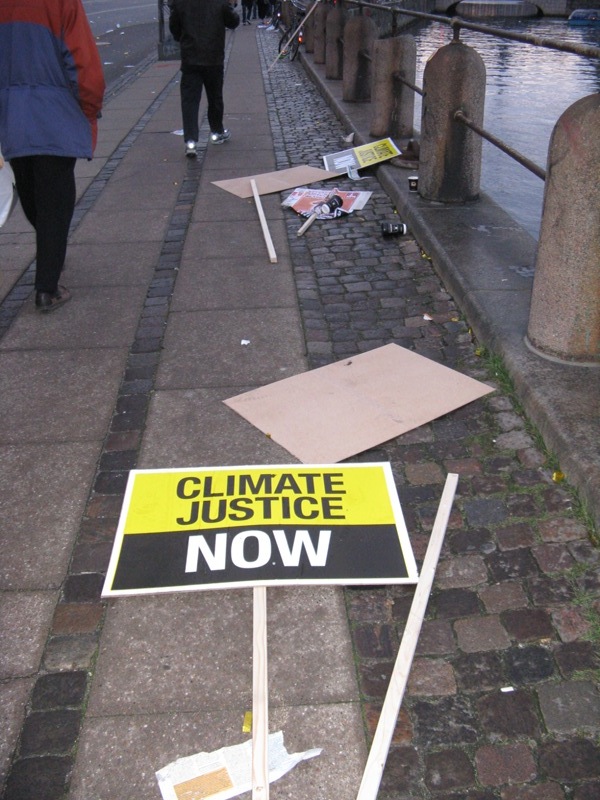
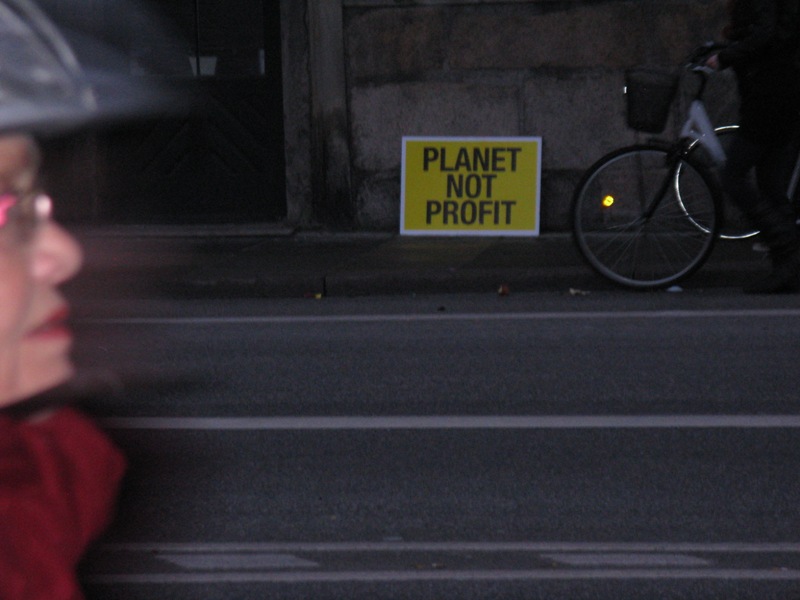
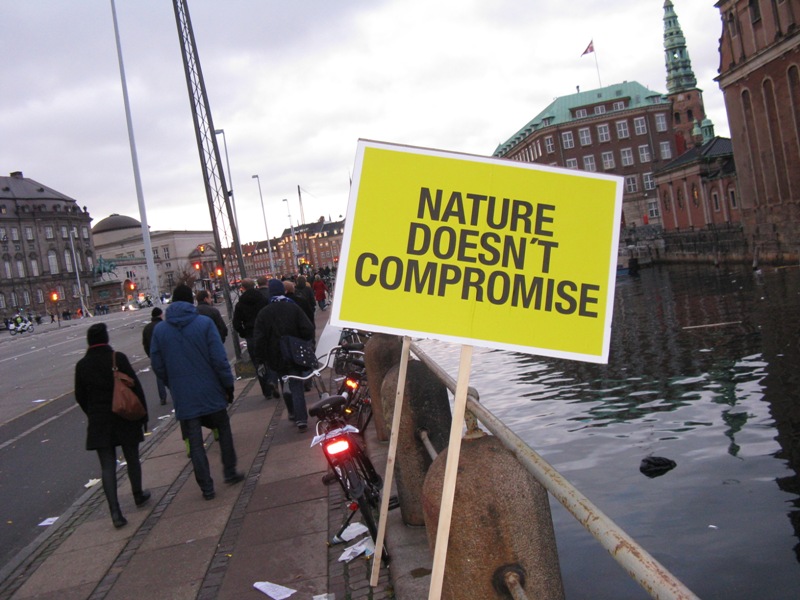
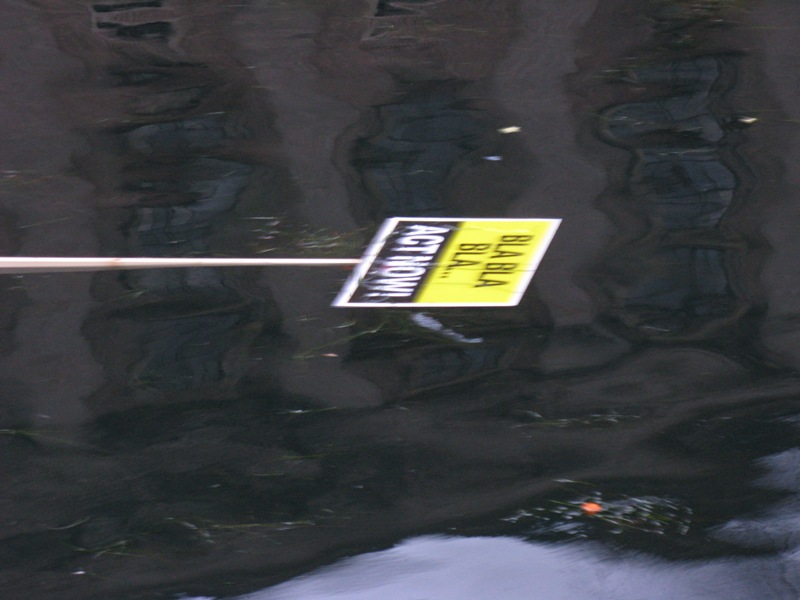
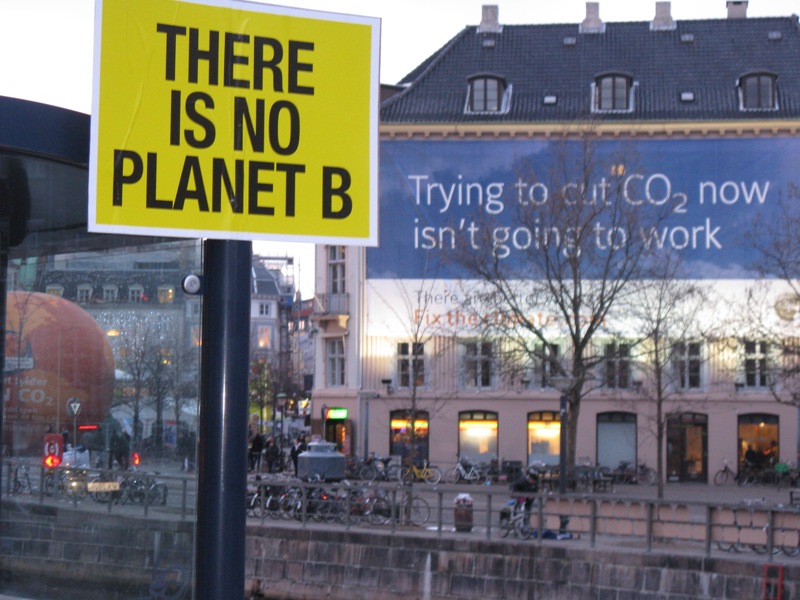
These statements, slogans from the streets if you wish, were to the point. They were messages to leaders, negotiators, the media and the rest of civil society including global warming skeptics about what to keep in mind as they try to discuss whether or how to cope with the causes and foreseeable consequences of a changing climate. There is a lot of wisdom in these basic statements, if only people take the time to ponder their deeper meanings, hopefully influencing behavior.
As is usually the case, the media, the politicians, negotiators and the public focus do not focus on the street wisdom adorning the placards but on the methods of delivery of those messages: the march, the gathering, the riot, the protest, etc. Yet, in my mind the true value of the demonstrations rests with the ideas succinctly stated on the placards.
So what are the chances that policy makers or negotiators — or anyone but a protester — might pay attention to, and think more deeply about, the meanings behind the slogans on the placards by people in the streets? Society will benefit as will the policy making process if policy makers and negotiators — in this case for controlling greenhouse gas emissions — pay serious attention to those slogans. Being ignorant of an issue in one thing that can be corrected with open eyes and ears. “Ignore-ance,” that is, the deliberate rejection of useful information is more difficult to fix, because those who practice it do not want to be educated with facts.

