Category: All Fragilecologies

  • Guest Editorial: From Blind Copying (bcc) to Basics (abc) in Science. -Ilan Kelman, CICERO, Oslo

    Guest Editorial: From Blind Copying (bcc) to Basics (abc) in Science. -Ilan Kelman, CICERO, Oslo

    Author: Ilan Kelman

    Science has become mired in blindness; it is dominated by bcc representing “blind copying”. That is, blindly copying what has gone before without innovative thought. In science today, bcc means Bureaucracy, Corporatism, and Conservatism.

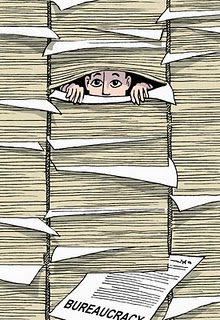
    Bureaucracy: Science is being bogged down in interminable reporting, complicated paperwork systems, and paperwork for paperwork’s sake. Rather than scientists, senior researchers are morphing into bureaucrats. That does not mean reducing accountability or project management. Those are feasible without snowing people under with paper and checklists. Science is becoming increasingly bureaucratic without any increase in accountability.

    Corporatism: Political leaders are heard today claiming that all money invested in science must have a business payback. Scientists are pummelled with corporatespeak such as visions, stretch goals, identities, and objectives. Those are useful approaches for structuring thoughts in certain contexts. They cannot apply to all contexts, especially exploratory research where the pathways and outcomes are not known–cannot be known–beforehand. If all research pathways and outcomes were known in advance, then we would not need research.

    Conservatism: Increasing expectations from science focus on outputs, such as counting the number of peer reviewed papers and ticking off the list of deliverables. Any attempt to take a risk is discouraged because, heaven forbid, results might not be publishable. New case studies can be nixed because it is not known what is there–which is precisely why those case studies should be researched. A culture of fear prevails that we might actually learn something different from what we expected in the first place.

    How could the bcc situation improve? We must move from the bcc of blind copying to the “back to basics” of abc. What is the basic purpose of science? To search for explanations and to gain knowledge. abc achieves that through Action, Boldness, and Curiosity.

    Action: Much of science plods along, week to week, hoping for a breakthrough or to find something publishable. That should not preclude excitement, dynamism, and acting on desires to know and learn more. No punishment should exist for taking action to pursue a query where potential exists for important results, even if that means deviating from the original plan or using the assigned budget for other activities. Note that action does not necessarily mean activism. The action can be along the lines of simple scientific enquiry, following a lead that appeared even if not listed in the initial project plan.

    Boldness: Science should not be afraid to take risks. Risking a project or part of a budget on a daring move, an odd case study, or a unique situation has the potential for immense gains. Even if 99% of bold decisions to strike out in new directions fail, the 1% success rate will pay back dividends that are orders of magnitude greater than the expense. The evidence? The transistor. The discovery of pulsars. The proof of the CFC-induced ozone hole. Amongst many others.

    Curiosity: Scientists these days frequently seem scared to ask deep questions. For example, challenge a leading scientist in climate change to prove assertions made and the consequence can be ostracism from the clique along with personal attacks. Dare to pursue a topic because it interests you and the consequence is being hauled before bureaucratic superiors to justify your use of time and budget. Try to shift a budget line to take advantage of recent developments and the consequence is being labelled a troublemaker by the granting agency who must use time (and hence money) to determine whether or not to approve such a small change. Investigation for “sheer curiosity”–just because it is there–is frowned upon. What is the point of research if we cannot follow the tendrils of our minds?

    Science is being killed by blind copying. We are losing creativity and innovation. Society loses in the long-run by having fewer explanations and less knowledge to apply for a better world. Where are the scientific visionaries and leaders today who can bring science back to life–back to basics?
  • “What’s the Fuss: The international community tolerated Mubarak for 30 years.” Mickey Glantz, February 4, 2011

    “What’s the Fuss: The international community tolerated Mubarak for 30 years.” Mickey Glantz, February 4, 2011

    “What’s the Fuss now?: The international community tolerated Mubarak for 30 years.”

    Mickey Glantz, February 4, 2011

    To read the news today either electronically or through printed media you’d think Hosni Mubarak changed from a Dr. Jekyll to a Mr. Hyde. You would think that something bit him while he was sleeping and when he awoke he had been transformed into a horrible dictator. The truth is that he has been a dictator for much of his 30-year rule. The relative voicelessness of Egyptians within the country about his dictatorial rule.

    (despite supposed democratic elections to the presidency) is understandable. Dictators stay in power through a rule of terror by using police and thugs to keep the people intimidated, quiet and powerless.

    What is not so understandable is the 30 years of silence by those governments that worked quietly with and alongside Mubarak’s regime for whatever reasons of state. US does not stand alone in this regard. So, Americans on the Left and on the Right of the political continuum are speaking out against or for American involvement in the Egyptian Revolution. The raving Left (and I am a bleeding heart liberal for the most part) wants Mubarak out today yet they were, for the most part, silent for decades about his rule. The raving political Right blames President Obama for not getting more involved verbally in the Egyptian revolution by calling for support for Mubarak. Both sides point out good arguments to support their views. But that is not my point.

    My point is that the silence of 30 years of dictatorial rule

    in the name of democracy was deafening in retrospect. It was as deafening as is the cries of a million Egyptians demanding that Mubarak abandon his presidency today. The people want him out and out he must go. But what about the scores of dictators running countries not only in the Middle East and North Africa but also around the globe? Will there be demands from the Right and the Left to depose them? Will they demand that their governments take actions to support the aspirations of the people for well-being, freedom and true democracy in their countries?

    Zimbabwe, Congo, Eritrea, Moldova, North Korea and Myanmar stand out as prominent examples of similar governments to target. There are more of them.

    It won’t happen for reasons we can guess. The one ‘excuse’ for their non-involvement (silence, that is) is the old rule of “non-interference in the internal affairs of member states.”

    Q: Mr. Secretary [of Defense, USA] did you speak with the President about the detention of political leaders in this country, the closure of the private press and how it will influence the relationship between your two countries?Answer by Rumsfeld (2002): “You know, yes the subject came up, we discussed it and the ambassador has discussed the issue and issues of that type. All across the globe and a country is a sovereign nation

    and they arrange themselves and deal with their problems in ways that they feel are appropriate to them. By the same token, other countries looking at how those arrangements are make their judgments as to how they feel about it and how they can interact with such countries. And it’s a very straightforward discussion and I think there’s clarity on both sides. And we are personally hoping that the relationship will evolve and strengthen and grow in the weeks and months and years ahead.”

    {Source: Secretary Rumsfeld Press Availability In Eritrea, Tuesday, December 10, 2002,

    http://www.defense.gov/transcripts/transcript.aspx?transcriptid=2855}

    The truth is that UN Charter rule of thumb is used as an excuse to take no action where action is likely warranted. However, that rule has also been put aside, when national interests of other countries were perceived to be adversely affected, politically, financially and sometimes (but not so often) because of humanitarian reasons. Maybe, in the age of globalization, where every country is in every other country’s face, the rule of not speaking out against bad governments has to be scrapped. With globalization of media (TV, Google, Facebook, Twitter and other social networks), there is no longer any place that dictatorial rule (bad governments, corrupt governments) can hide.

    Today in Tunisia and in Egypt it became obvious to all that the proverbial emperors were wearing no democratic clothes. Will the fervor of these popular revolutions prove contagious to other parts of the globe — not just the Middle East and North Africa — to those people who have had no voice and to those on the Right and Left whose voices can influence the policies of their governments on behalf of the oppressed and voiceless people?

  • “The people are revolting. And rightly so.” Mickey Glantz. February 1, 2011.

    “The people are revolting. And rightly so.” Mickey Glantz. February 1, 2011.

    “The people are revolting. And rightly so”

    Mickey Glantz. February 1, 2011.

    A recent ad in a Time Magazine caught my eye. It was a one-page ad to encourage more people to subscribe to TIME. The page contained a photo of a farmer somewhere in the Chinese countryside using a one-tine ox-drawn plow to prepare the soil for planting. Passing high above him and the field he was plowing there was a bridge under construction. The caption on the photo was a play-on-words, a riddle really, “What happens when China catches up with China?”

    The ad’s caption raises lots of questions, for those who took the time to think about the underlying messages sparked, as well, by the images of both farmer & bridge. The ad provides an interesting jumping off point for discussion not only about the benefits of economic development for the well being of people and for the environment, symbolized by the bridge, but also the drawbacks of such development, symbolized by the farmer, the plow, and the ox.

    The TIME magazine one-page ad refers to the current and apparently growing gap in China between the country’s haves, especially the super affluent, and its have-nots, especially those living in abject poverty. With all the news about China’s prosperity, accumulation of dollars, and record-breaking statistics (e.g., the most number of Ferraris in the world have been sold in Shanghai!), the gap between the richest and the poorest segments of society has been growing. The Chinese government noted this concern in 2005: “Even as some Chinese, particularly in the big cities, are able to earn more, many others, notably those in rural areas and the less developed areas of Western China, are being left behind. The result is a widening gap between rich and poor that is attracting growing comment from top officials.” (www.usnews.com/usnews/news/articles/050929/29world.htm)

    China’s population is approaching 1.4 billion inhabitants. Many have done very well with China’s booming economy as a result of economic liberalization and continued future expansion looks like it will be quite robust. There is even talk that the 21st century will be China’s century as an economic power.

    The total population of China, which is like the denominator in a fraction, is much greater than the much smaller percentage of that population can be considered as the “haves” which can be represented as the fraction’s numerator. What would happen if the proportion of the population of “haves” were to sharply increase? The denominator is soooo big that it will not be possible to bring the numerator anywhere near it: hence, a gap. And that gap between richest and poorest has been acknowledged by china as increasing. Even as the numerator gets bigger as more people prosper so too does the denominator increase as the population grows.

    Of course, the have nots of the population hope that their economic situation will improve over time. The other part of the population is weighted toward the poor. The bottom half of the country strives for what the upper half has in terms of quality of life: better food stuffs, more cars on the roads, an increase in air conditioning, and other attributes associated with an improved quality of life. If the “have nots” are successful, China will have to contend with increasingly gridlocked roadways, air pollution, and a continued dependence on the use of fossil fuels, increasing need for food and water supplies, and so forth.

    As suggested at the outset, the question TIME raised also lent itself to the following question: What happens when China fails to catch up with China? In other words, what
    will happen if in the midst of growing affluence by a segment of the Chinese population, the poorer segments of the Chinese population remain poor? Government and Communist Party leaders officially acknowledge that the tens of thousands of protests each year by farmers and workers are on the rise. Chinese leaders are well aware of the potential downsides of rapid economic development and economic liberalization, and they continue to seek to bring about “social harmony.” But rapid economic growth continues and the gaps between rich and poor, city and countryside continue to grow. China, however, is not alone in this regard. In the reverse of the TIME question “What happens when China catches up with China,” the word ‘China’ could be replaced by the many scores of countries for which the question(s) remain relevant.

    Most recently, the multi-decade rule of the Tunisian President Ben Ali came to an abrupt end by the desperate act of a poor, young, 26 year old Tunisian, Mohammed Bouazizi, who was just trying to support his family of eight by selling produce from an unlicensed cart. His cart was confiscated and a policewoman spit on him in a dispute over not having a license for his cart. His self-immolation in front of police headquarters sparked a revolution. That revolution has since sparked similar popular uprisings against other leaders in the Middle East, most vividly in Egypt and in Yemen. So the question remains a useful one to keep in mind for any country, however seemingly stable their government might be, “What happens if Country X does not catch up with Country X?”

    Many dictatorial leaders in the Middle East and elsewhere are probably not sleeping well these days. And rightly so.

  • “Haiti: Wither thou goest?”. Mickey Glantz. January 17, 2011

    “Haiti: Wither thou goest?”. Mickey Glantz. January 17, 2011

    “Haiti: Wither thou goest?”. Mickey Glantz. January 17, 2011

    The Republic of Haiti sat on a wall.
    The Republic of Haiti had a great fall.
    All the Great Powers and all the UN
    Couldn’t put Haiti together again.
    Or so it seems. Why not?

    Haiti is a country with about 10 million inhabitants, almost 50 percent of which are 15 or under. It gained independence from France in 1804. It has had problems of various kinds since then, but not because of its independence. Throughout its history, it has only sporadically had what might be called a good government. It is quite clear that in the 20th century Haiti has not really seen a good government, at least as far as I can tell.

    I read a popular history of Haiti written in 1954 and it was not flattering to US involvement in the country in the form of “gunboat diplomacy” in the first half of the 20th century. Papa Doc Duvalier came to power in 1957 and was a brutal dictator until the late 1970s when his 19 year old son took over, Baby Doc. Every government knew about the corrupt and brutal dictatorships but did nothing to help the Haitian people until riots brought down the Baby Doc regime. Off to France he went, into exile with the alleged $300 million he stole from his impoverished people.

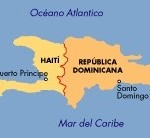
    The country is still a mess, even more so following the January 2010 earthquake. Tens of thousands of people are still living in tent towns, surviving with access only to minimal resources. A cholera outbreak in parts of Haiti have made the devastating situation in the western third of the island of Hispanola even worse. It seems that in Haiti when one crisis is dealt with two pop up in its place. The island nation seems unable to get a break from a constant stream of bad news.

    This week, in the midst of the anniversary of the great earthquake 2010, the former ruthless dictator, Jean-Claude “Baby Doc” Duvalier — deposed 25 years ago — chose to return to the country, allegedly to see how he could help it. The motive for his return, though, is not really known. He was a deadly corrupt dictator who jailed, tortured or had killed those who opposed his rule. His father, Papa Doc Duvalier, and his private army (Tonton Macoute) were much worse. They were evil. Thanks to the security blanket called national sovereignty, the United Nations did little to protect Haitian civil society from the wrath of the Duvaliers. Sadly, the USA also did little for the Haitians, probably because of its strategic geographic location … facing Cuba. A large portion of the Haiti’s young population are unaware of the horrors carried out by the Duvaliers.

    Today, there are lots of NGO activities, aid programs and bilateral agreements between Haiti and other countries, each of which is trying to help the people. Yet, the people still suffer in great numbers, as there are more than these humanitarian efforts can help at any given point in time. The land surface is denuded. A large portion of the general population is not well educated, health problems afflict all ages, unemployment abounds, and most of the people are dirt poor. Making living conditions worse, the land surface has been deforested making the country prone to mudslides and rainfall runoff. But why is Haiti in such poor condition with so much assistance offered to the country before, during and after the deadly earthquake?

    What is needed is radical, out-of-the-box thinking to break the downward spiral. Industrialized as well as industrializing countries such as Brazil and China have to step up, take charge on behalf of the citizens of Haiti and develop this small impoverished country.

    There are other ideas as well. It seems that Haiti needs a new territory to inhabit (none to be found or offered). If not, it needs an enlightened honest government, a reliable flow of assistance, widespread reforestation, medical facilities, access to nutrition, and jobs, etc. A really radical (some will say retro) way to give Haitians a chance to get those things would be if the country were made a Mandate of the United Nations. Under the League of Nations, former German and Italian colonies were made Mandates after WWI put into the care of other (victor) nations. The UN Community of Nations would then take on the responsibility to create a sustainable Haiti within a fixed period of time.

    League of Nations Mandate

    If the collective wisdom of the industrial world world cannot collectively help to develop a small country with 10 million inhabitants, then it should stop telling billions of people in developing countries that there is hope for their economic development prospects and improved well being.

    Success with Haiti would provide inspiration to other countries in the Fourth World (the bottom half of the Third World) that there is a bright light for them as well at the end of the economic development tunnel.

  • Geo-engineering the Earth’s Atmosphere: Is Seward’s Icebox Becoming America’s Oven? Mickey Glantz. January 5, 2011

    Geo-engineering the Earth’s Atmosphere: Is Seward’s Icebox Becoming America’s Oven?
    Mickey Glantz
    January 5, 2011
    It’s the End of the World as We Know It
    This is a story in three parts.

    1) In 1867, the US bought Alaska from the Russian Empire for $7.2 million in gold. Here’s a photo of the original check used to pay for it.
    At the time, opponents of the purchase labeled it Seward’s Folly. William Seward was then the US Secretary of State, and he negotiated the sale. The land that he purchased (now Alaska) was then a territory completely unexplored by any but its native populations. It was perceived by the American public as being little more than a cold, snow-covered tundra, inhospitable to any possible future human settlement. Hence, Seward’s Folly. (more…)

  • “Nobody Wanted Global Warming. But Nobody Wanted World War I Either”  Mickey Glantz.  January 1, 2011

    “Nobody Wanted Global Warming. But Nobody Wanted World War I Either” Mickey Glantz. January 1, 2011

    Nobody Wanted Global Warming. But Nobody Wanted World War I Either”
    Mickey Glantz and Gregory Pierce (CSU). January 1, 2011. HAPPY NEW YEAR.

    Forty years ago, R.K. White wrote a book entitled “Nobody Wanted War” about the perceptions and the misperceptions that led to the war in Vietnam and other wars in history. Especially interesting is White’s discussion of the interrelationships and egocentricities across the empires of Europe at the beginning of the twentieth century that led to World War I, the so-called ‘war to end all wars’.
    (more…)

  • “Hey, Universities!! How about an Academic ‘Discipline of Curiosity’” Michael H. Glantz 16 December 2010

    “Hey, Universities!! How about an Academic ‘Discipline of Curiosity’” Michael H. Glantz 16 December 2010

    “Hey, Universities!! How about an Academic ‘Discipline of Curiosity’”
    Michael H. Glantz. 16 December 2010

    There are universities filled with academic departments of all kinds: physics, math, sociology, music, political science, philosophy, oceanography, education, and so forth. You get the picture. We have these academic discipline-based divisions in America. Yet, statistical records that compare American education of kindergarten through the university level show that American kids today are less knowledgeable than their parents! How can that be? Don’t we have a National Science Foundation pumping billions into research and educational activities? Don’t we have associations like the AAAS, the AMS and the AGU to foster education in the technical disciplines? (more…)

  • “Twenty Somethings” of the World Unite (Prepared at COP 16 in Cancun, Mexico).  Mickey Glantz.  8 December 2010

    “Twenty Somethings” of the World Unite (Prepared at COP 16 in Cancun, Mexico). Mickey Glantz. 8 December 2010

    “Twenty Somethings” of the World Unite (Prepared at COP 16 in Cancun, Mexico)

    Mickey Glantz
    8 December 2010

    This is a quick note (that is, I wrote it as if I were speaking to someone) that was first sent to the group of students who participated in the First International Graduate Conference on Climate Change and People” held 15-19 November in Kathmandu, Nepal. I have been learning a lot (see, old people can still learn!) being at the COP16 side event, though I was not there as an active negotiator. Negotiations that have occurred in the first week may end up having little to do with what will happen in the second week (now in progress) when the Ministers’ level gets involved in negotiations. They are likely less familiar with the details and nuances of climate change science and its impacts that the negotiators have been dealing with and they are more political I believe than most of their national negotiators. (more…)

  • “Ghost Buildings in Beijing.”  Mickey Glantz.   31 October 2010

    “Ghost Buildings in Beijing.” Mickey Glantz. 31 October 2010

    During a recent trip to Beijing, I was fascinated by “ghost buildings” in Beijing and I waited till Halloween to talk about it. As far as I know, I am the only one who refers to them as ghosts. They are not unique to China but the high level of pollution in some Chinese cities has become quite notable even in the Chinese press.

    A ghost building is one that cannot be seen during the day, because of the high degree of opaqueness of the air in the city. The pollutants from factories and cars, buses and trucks often combine with fog to produce a concoction called smog, an unhealthy combination for one’s lungs. I noticed smokestacks both short and tall ones belching into the air aloft smoke and steam and heaven knows what else of various shades of grey. (more…)

  • “Are politicians really a commodity that can be bought and sold?”  Mickey Glantz  October 12, 2010

    “Are politicians really a commodity that can be bought and sold?” Mickey Glantz October 12, 2010

    “Are politicians really a commodity that can be bought and sold?”

    Mickey Glantz.

    October 12, 2010

    It seems that there is a lot of hard evidence as well as circumstantial evidence to support this contention. Every once in a while there is a big scandal where a politician has made an arrangement to make a deal in return for a vote. Now, that vote might have been cast in that direction anyway and the politician was just taking an advantage to cash in on a sure thing. Nevertheless, it is a form of corruption, the kind we like to expose in other developing countries whenever there is a debate about the government’s foreign aid budget.

    the cartoon is worth 1000 words
    (more…)